The Neurodivergent Future: Alex Karp, Artificial Intelligence and the Coming Revolution in Human Intelligence
By Matthew Parish
Friday 16 October 2026
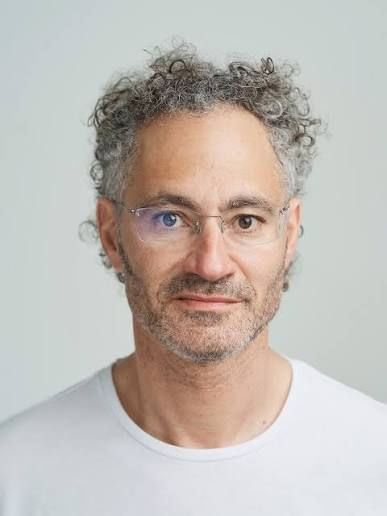
One of the more provocative predictions about the future of artificial intelligence comes from Alex Karp, the unconventional chief executive of the American technology company Palantir Technologies. Karp has suggested that the people most likely to flourish in an economy transformed by artificial intelligence will be those whose minds work differently from the conventional patterns of human cognition. In particular, he has identified neurodivergent individuals as potentially enjoying advantages in a world in which machines increasingly undertake the routine intellectual activities that have traditionally sustained the professional middle classes. It is an arresting proposition, not least because it reverses many of the assumptions upon which modern educational institutions, professional hierarchies and corporate recruitment practices have been constructed.
For generations, successful participation in advanced industrial societies has depended upon a particular constellation of intellectual and social attributes. The successful professional has typically been expected to demonstrate sustained concentration, reliable organisational habits, social adaptability, conformity with institutional expectations and the capacity to assimilate established bodies of knowledge. Universities have rewarded the ability to reproduce sophisticated arguments within recognised intellectual frameworks, while employers have valued individuals who can communicate fluently, cooperate effectively and perform complex but substantially predictable tasks. Those whose minds operate outside these conventions have frequently encountered substantial obstacles, notwithstanding their intellectual abilities or creative potential.
Karp’s suggestion is that artificial intelligence may fundamentally alter this arrangement. If machines become increasingly capable of performing the intellectual functions that have traditionally rewarded conventional cognitive abilities, then the comparative advantages of human beings may migrate towards less predictable qualities of thought. Unusual intellectual associations, obsessive curiosity, unconventional problem-solving, resistance to received wisdom and the capacity to perceive patterns invisible to others may become increasingly valuable. The very characteristics that have sometimes made neurodivergent individuals uncomfortable participants in established institutions could, under certain circumstances, become sources of considerable intellectual and economic strength.
There is something both exhilarating and troubling about this argument. It promises a world in which individuals previously marginalised by conventional expectations may discover unprecedented opportunities to exercise their abilities. Yet it also risks replacing one narrow conception of human worth with another, suggesting that only particular cognitive dispositions deserve to prosper in an increasingly automated society. To assess Karp’s proposition properly, we must distinguish between its technological foundations, its psychological assumptions and its wider philosophical implications for the organisation of human society.
The meaning of neurodivergence
The first difficulty is that neurodivergence is not a single psychological characteristic, still less a reliable predictor of exceptional intellectual achievement. It is an umbrella concept encompassing variations in cognitive functioning commonly associated with autism, attention deficit hyperactivity disorder, dyslexia and other neurological or developmental differences. These conditions and characteristics are themselves enormously diverse. Two autistic individuals may possess radically different abilities, preferences and support needs, just as two people with ADHD may experience their condition in substantially different ways.
The concept of neurodiversity emerged in part as a challenge to the assumption that departures from statistically typical cognitive functioning must necessarily be understood as deficiencies. Its central insight is that human minds vary naturally and that social institutions frequently define certain variations as disabilities because they are organised around particular expectations of behaviour. A person who finds a noisy office intolerable, for example, may be exceptionally productive in a quiet environment. Someone who struggles with conventional classroom instruction may demonstrate remarkable capacities for independent investigation, technical reasoning or artistic invention.
Nevertheless, it would be a serious mistake to romanticise neurodivergence. Some neurodivergent people experience substantial difficulties with communication, executive functioning, sensory processing, emotional regulation or everyday independence. Others experience comparatively modest difficulties and may possess particular abilities that are unusually well suited to certain occupations. Many experience a mixture of strengths and challenges, and the relationship between their cognitive characteristics and their professional success depends heavily upon their circumstances.
There is consequently no defensible scientific proposition that neurodivergent individuals, considered as a single population, are inherently more intelligent, creative or capable of original thought than neurotypical individuals. Nor is there any basis for assuming that neurotypical people are necessarily conformist, unimaginative or intellectually conventional. The categories are far too broad, and the distribution of human abilities within them is far too complex, to support such sweeping conclusions.
What Karp’s argument can plausibly suggest is something narrower and more interesting: that certain cognitive characteristics, some of which occur among neurodivergent individuals, may become increasingly valuable as artificial intelligence transforms the structure of intellectual work.
Artificial intelligence and the declining value of conventional competence
The technological foundation of Karp’s prediction lies in the extraordinary expansion of the tasks that artificial intelligence systems can perform. Contemporary large language models can draft legal memoranda, summarise scientific literature, analyse computer code, translate between languages, construct financial models and generate persuasive prose. Their performance is imperfect and requires supervision, but their growing capabilities challenge the assumption that professional intellectual labour necessarily requires years of human training.
The significance of this development is not simply that machines are becoming more intelligent. It is that they are becoming proficient at precisely those activities upon which modern professional status has often depended. The capacity to absorb large quantities of information, identify established patterns, apply recognised analytical frameworks and produce coherent explanations has traditionally distinguished educated professionals from the remainder of the workforce. Artificial intelligence increasingly makes some of these capabilities available at negligible marginal cost.
Consider the conventional legal profession. Much of the work undertaken by junior lawyers involves reviewing documents, identifying relevant authorities, summarising judicial decisions and applying established legal principles to particular factual circumstances. These are intellectually demanding activities, but they are also sufficiently structured that artificial intelligence can assist with them extensively. The lawyer whose principal advantage lies in possessing an excellent memory, writing competent prose and following established analytical procedures may discover that these qualities no longer command the premiums they once did.
Something similar may occur in accountancy, financial analysis, management consultancy, software engineering and numerous other professional occupations. Artificial intelligence will not necessarily eliminate these professions, but it may redistribute value within them. Routine competence may become less scarce, while the ability to formulate original questions, identify hidden assumptions, exercise sound judgement under uncertainty and challenge established methodologies becomes more important.
This is where Karp’s argument acquires its force. An individual who thinks in unusual ways may be less inclined to accept the conventional formulation of a problem. Such a person may ask questions that others overlook, recognise connections between apparently unrelated phenomena or pursue an unconventional hypothesis long after more socially conformist colleagues have abandoned it. If artificial intelligence can undertake much of the routine analytical labour, then the human capacity to determine what ought to be investigated may become especially valuable.
Yet this transformation does not imply that conventional intellectual competence will become worthless. The ability to assess evidence, distinguish reliable information from plausible fabrication, communicate conclusions and understand the human consequences of decisions will remain indispensable. Indeed, as artificial intelligence makes the production of apparently authoritative information easier, the importance of sound judgement may increase rather than diminish.
The future may therefore reward unusual intellectual perspectives, but only when they are combined with sufficient practical competence to translate insights into useful results.
What Alex Karp actually said
It is important to distinguish Karp’s actual argument from the more sensational interpretation that only neurodivergent people will survive the artificial intelligence revolution. In a March 2026 appearance on the technology programme TBPN, Karp identified two categories of people whom he believed could face the future with particular confidence: those possessing vocational skills and those who are neurodivergent. His formulation was deliberately provocative, but it was not a literal prediction that everybody else would become unemployable.
Karp’s conception of neurodivergence was also unusually expansive. He was referring not merely to people possessing particular neurological diagnoses, but to those who approach problems creatively, depart from established intellectual conventions and construct something original. He invoked the artistic temperament as much as any clinical category. His own experience of dyslexia appears to have influenced his conviction that people who cannot easily follow established educational pathways may develop alternative intellectual strategies that ultimately prove advantageous.
The vocational element of his argument deserves equal attention. Electricians, plumbers, mechanics and other skilled tradespeople perform work requiring physical dexterity, practical judgement and adaptation to unpredictable material circumstances. These activities are not necessarily immune to automation, but they present different technological difficulties from the manipulation of information on a computer screen. A machine capable of drafting an impressive legal opinion is not thereby capable of repairing a damaged electrical installation in an unfamiliar building.
Karp’s company has sought to give institutional expression to his ideas through a Neurodivergent Fellowship, intended to recruit people whose intellectual abilities might not be adequately recognised by conventional selection processes. This is an interesting experiment because it suggests that his argument is not simply rhetorical. Palantir is attempting to discover whether unconventional cognitive characteristics can be converted into competitive advantages within an organisation developing advanced technological systems.
Nevertheless, there is an obvious tension in the position of a technology executive who predicts that artificial intelligence will undermine conventional intellectual employment while simultaneously arguing that particular kinds of human intelligence will remain irreplaceable. It is possible that he is identifying a genuine transformation in the comparative advantages of human cognition. It is equally possible that he is extrapolating from the particular qualities that have contributed to his own success, and from the culture of the company he leads.
The history of technological innovation is littered with predictions that proved accurate within a narrow field but misleading when generalised to society as a whole. Karp’s views should therefore be treated as a serious hypothesis about the changing economic value of human abilities, rather than as a settled account of the future.
Artificial intelligence as an intellectual prosthesis
There is a further dimension to this debate that may prove more important than Karp’s original prediction. Artificial intelligence may not merely increase the economic value of unconventional thinking. It may also help neurodivergent individuals overcome some of the practical difficulties that have historically prevented them from exercising their abilities to their fullest extent.
Consider an individual who possesses exceptional analytical capabilities but struggles with the administrative demands of conventional employment. Such a person may find correspondence, scheduling, bureaucratic procedures and the management of multiple competing obligations disproportionately exhausting. These difficulties may have little relationship to the quality of their substantive intellectual work, yet they can substantially impair their professional prospects.
Artificial intelligence offers increasingly sophisticated assistance with precisely these activities. It can organise information, structure complex projects, draft routine correspondence, identify inconsistencies and translate loosely formulated ideas into coherent written documents. For someone whose intellectual strengths are accompanied by difficulties with executive functioning, these capabilities may be particularly valuable.
A person who has struggled to convert an abundance of ideas into finished projects may discover that an artificial intelligence assistant can provide the organisational structure previously supplied by colleagues, secretaries or institutional support. Someone who finds conventional written communication difficult may be able to express complex ideas through conversation and then use artificial intelligence to translate those ideas into polished prose. An individual who becomes overwhelmed by large quantities of unstructured information may use computational tools to classify, summarise and prioritise that material.
These possibilities should not be overstated. Artificial intelligence systems themselves impose cognitive demands, and they may generate confusion, inaccurate information or additional administrative burdens. Nor will every neurodivergent person benefit from the same forms of assistance. Accessibility must be designed around individual needs rather than an imagined universal neurodivergent personality.
Nevertheless, the possibility is profound. For some individuals, artificial intelligence may reduce the practical significance of a disability without requiring the individual to abandon the cognitive characteristics that contribute to their identity. Instead of demanding that everybody adapt to the organisational conventions of the twentieth-century office, technology may permit a greater diversity of working methods.
This is a rather different proposition from the claim that neurodivergent people will dominate the future. It suggests that artificial intelligence could make professional life more accessible to people whose abilities have been systematically underestimated. The resulting benefits might extend well beyond any particular diagnostic category.
The philosophical problem of conformity
At the centre of Karp’s argument lies an older philosophical question concerning the relationship between intellectual originality and social conformity. Human societies require cooperation, shared conventions and predictable behaviour if their institutions are to function. Yet intellectual progress frequently depends upon individuals who are willing to challenge precisely those conventions.
The history of philosophy offers numerous examples of thinkers who regarded the capacity to question received assumptions as essential to the pursuit of knowledge. Socrates challenged the apparent certainties of Athenian public life, while Immanuel Kant distinguished between the passive acceptance of intellectual authority and the exercise of autonomous reason. John Stuart Mill defended freedom of thought partly because unconventional opinions might reveal errors concealed within prevailing orthodoxies.
These philosophers were not advancing modern theories of neurodivergence, and it would be anachronistic to assign them neurological diagnoses. Their relevance lies instead in their recognition that intellectual progress requires a society to accommodate individuals who think differently from the majority.
There is also a connection with the philosophy of science. Thomas Kuhn’s account of scientific revolutions emphasised the distinction between normal science, conducted within an established intellectual paradigm, and periods in which that paradigm itself becomes subject to fundamental challenge. Most scientific activity depends upon the disciplined application of accepted methods. Revolutionary scientific change, however, requires the capacity to recognise that the accepted methods may no longer provide an adequate account of reality.
Artificial intelligence may become extraordinarily effective at activities analogous to normal science. It can assimilate existing knowledge, identify relationships within established bodies of evidence and apply recognised analytical procedures at remarkable speed. Whether it can consistently generate the conceptual transformations associated with major scientific revolutions remains an open question.
The philosophical significance of Karp’s prediction therefore depends upon whether artificial intelligence will principally automate established forms of reasoning or eventually become equally proficient at creating entirely new intellectual frameworks. If the former, unconventional human thinkers may indeed acquire increasing importance. If the latter, then even the most original forms of human cognition may encounter technological competition.
Yet originality should not be confused with mere eccentricity. The individual who challenges every established assumption is not necessarily more intelligent than the individual who accepts conclusions supported by overwhelming evidence. Productive intellectual independence requires the ability to distinguish conventions that deserve to be challenged from those that embody accumulated knowledge and practical wisdom.
The most valuable intellectual characteristic may therefore be neither conformity nor nonconformity, but the capacity to determine when each is appropriate.
The danger of a new cognitive aristocracy
There is a troubling possibility concealed within the more enthusiastic interpretations of Karp’s argument. If the future economy comes to reward certain unconventional cognitive characteristics disproportionately, society may develop a new hierarchy of intellectual worth. Those possessing commercially valuable forms of creativity or pattern recognition may become highly sought after, while others find themselves increasingly excluded from meaningful employment.
Such a development would not necessarily represent progress towards a more humane society. It might simply replace the traditional advantages associated with educational credentials and social conformity with a new set of advantages determined by cognitive characteristics. The old professional aristocracy would give way to a new technological aristocracy, distinguished by its ability to formulate original ideas and exploit increasingly powerful computational systems.
There is an additional risk that neurodivergence itself becomes commodified. Employers may celebrate unconventional thinking when it produces profitable innovations while remaining unwilling to accommodate the difficulties that sometimes accompany it. They may seek the exceptional programmer who can identify obscure patterns in complex software, but show considerably less enthusiasm for the same individual’s difficulties with workplace communication or sensory overstimulation.
Such selective appreciation would misunderstand the ethical foundations of neurodiversity. The case for accommodating different cognitive characteristics does not depend upon demonstrating that every individual possesses some extraordinary commercial talent. Human beings deserve dignity, opportunity and reasonable support regardless of whether their particular characteristics generate economic advantages for their employers.
This distinction is particularly important for neurodivergent individuals with substantial support needs. A society that celebrates exceptional technical achievement while neglecting those who require extensive assistance would hardly deserve to describe itself as inclusive.
Nor should neurotypical individuals be regarded as somehow intellectually obsolete. Empathy, interpersonal sensitivity, patience, practical wisdom and the ability to sustain relationships are qualities distributed across the human population. They are not exclusive to any neurological category, and their importance is unlikely to disappear merely because machines become more proficient at information processing.
Indeed, a world increasingly populated by artificial intelligence systems may place an even greater premium upon the human capacity to care for others. Nursing, education, social work, diplomacy and the maintenance of communities involve forms of judgement and responsibility that cannot adequately be measured by computational efficiency alone.
The ultimate objective of technological progress should not be to identify which minority of humanity will remain economically indispensable. It should be to ensure that the benefits of increasing productivity can be shared across society, including among those whose contributions cannot readily be expressed in financial terms.
The question of education
Karp’s prediction also raises difficult questions about the future of education. If artificial intelligence can perform many of the intellectual activities traditionally assessed through examinations, essays and professional qualifications, then educational institutions will have to reconsider what they are attempting to cultivate.
The conventional examination system frequently rewards the ability to reproduce established knowledge under controlled conditions. Such assessments can measure valuable abilities, but they do not necessarily reveal whether a student can formulate an original question, recognise a neglected problem or develop an innovative intellectual approach.
Artificial intelligence makes this distinction increasingly important. A student who can reproduce an excellent summary of a philosophical argument may possess less distinctive intellectual value than one who identifies a fundamental weakness in the argument and develops a new interpretation. Similarly, the ability to write technically correct computer code may become less valuable than understanding which problems are worth solving and how software should interact with the wider human environment.
There is consequently a strong argument for educational institutions to place greater emphasis upon intellectual independence, creative experimentation and interdisciplinary inquiry. Students should learn not merely how to obtain answers, but how to formulate questions whose answers are not already apparent.
Nevertheless, Karp’s scepticism towards conventional higher education should not be taken too far. Originality without knowledge is frequently little more than speculation. The ability to challenge established intellectual frameworks depends upon understanding them, and serious innovation often requires prolonged immersion in disciplines whose methods initially appear restrictive.
A philosopher cannot readily overturn an argument they have never understood. A scientist cannot responsibly challenge an experimental methodology without comprehending the reasons for its adoption. An engineer who disregards established principles of structural integrity may produce something novel, but novelty alone will not prevent a bridge from collapsing.
Education must therefore preserve the distinction between intellectual discipline and intellectual conformity. The former is indispensable to serious inquiry, while the latter can become an obstacle to it.
The challenge is to develop institutions that teach students how to think rigorously without insisting that everybody think identically. Such an educational philosophy would benefit neurodivergent and neurotypical students alike.
The implications for wartime Ukraine
These questions have particular resonance in contemporary Ukraine, where the pressures of war have produced an extraordinary acceleration of technological experimentation. The development of drones, electronic warfare systems, battlefield communications and improvised logistical solutions has required an unusual combination of technical expertise, practical ingenuity and willingness to abandon established assumptions.
Wartime innovation frequently emerges from small groups of individuals who are prepared to experiment outside conventional institutional structures. Engineers, software developers, soldiers and civilian volunteers collaborate in ways that would have seemed improbable before the full-scale Russian invasion. Problems that might previously have required lengthy bureaucratic deliberation must sometimes be addressed through rapid experimentation under conditions of considerable uncertainty.
Such an environment can reward unconventional problem-solving. A person who approaches a technical problem from an unexpected direction may discover a solution overlooked by those accustomed to established procedures. Artificial intelligence can accelerate this process by assisting with technical research, software development, data analysis and the comparison of alternative approaches.
Yet the Ukrainian experience also illustrates the limits of celebrating individual eccentricity. Successful military and humanitarian innovation requires cooperation, reliability, discipline and the capacity to integrate new ideas into functioning organisations. An ingenious technical invention is of little practical value if it cannot be manufactured, maintained, supplied and deployed effectively.
The lesson is not that neurodivergent individuals are uniquely suited to wartime innovation. There is no adequate basis for such a generalisation. Rather, it is that institutions operating under extraordinary pressure may benefit from accommodating a wider range of intellectual approaches than conventional bureaucracies ordinarily permit.
Ukraine’s technological achievements have emerged from combinations of creativity, technical competence, practical experience and collective determination. These qualities are not confined to any neurological category. They illustrate instead the advantages of creating environments in which unusual ideas can be tested against the demands of reality.
Can artificial intelligence itself become neurodivergent?
There is one final philosophical complication. Karp’s argument appears to assume that unconventional human cognition will retain advantages over artificial intelligence because machines are fundamentally better suited to conventional forms of reasoning. But this assumption may not survive the continued development of increasingly sophisticated artificial intelligence systems.
Large language models are trained upon enormous collections of human-produced information, and their outputs are influenced by statistical regularities within that material. This can encourage conventional responses, particularly where training and evaluation reward answers that correspond to established expectations. Yet these systems can also combine concepts from distant intellectual domains, generate unusual hypotheses and produce ideas that human observers regard as creative.
The question is whether such creativity represents genuine intellectual originality or merely the recombination of existing patterns. This is not a straightforward distinction. Human creativity itself frequently depends upon recognising unexpected relationships between previously familiar ideas. Many scientific and artistic innovations emerge through the transformation of existing conceptual materials rather than the creation of something entirely without precedent.
If artificial intelligence systems become capable of producing increasingly original and useful ideas, then the distinction between conventional machine reasoning and unconventional human reasoning may become less secure. Machines may eventually be capable of challenging established paradigms as effectively as they apply them.
It would nevertheless be misleading to describe such systems as neurodivergent in the ordinary human sense. Neurodivergence concerns variations in human neurological development and cognitive experience. Artificial intelligence systems possess different architectures and developmental histories, and there is no reason to assume that their computational differences correspond directly to human neurological categories.
The analogy may still be philosophically illuminating. It encourages us to question whether intelligence should be understood as a single scale of cognitive ability or as a collection of different capacities that can be combined in numerous ways.
An artificial intelligence system might excel at formal reasoning while possessing very different limitations from those encountered by human beings. Another system might demonstrate exceptional capacities for pattern recognition or creative synthesis. The future may therefore involve not merely greater diversity among human cognitive styles, but an increasingly complex relationship between different forms of biological and artificial intelligence.
In such a world, the most important human ability may be the capacity to collaborate productively with intelligences that operate in ways fundamentally different from our own.
Towards a more generous conception of intelligence
Alex Karp deserves credit for drawing attention to a genuine weakness in the way modern societies evaluate intellectual ability. Too many educational and professional institutions have confused conformity with competence, fluency with understanding and conventional achievement with genuine originality. Individuals whose minds operate differently have sometimes been excluded from opportunities for which they were exceptionally well suited.
Artificial intelligence may help expose these weaknesses. As machines become increasingly capable of performing conventional intellectual tasks, employers and educational institutions may be compelled to reconsider what distinguishes valuable human contributions. The ability to formulate original questions, exercise independent judgement and perceive unexpected possibilities may become increasingly important.
But the claim that only neurodivergent individuals will succeed in the artificial intelligence future is too sweeping to withstand careful scrutiny. It rests upon an excessively broad understanding of neurodivergence, an uncertain prediction about technological development and an unnecessarily narrow conception of human achievement. Even Karp’s own formulation, properly understood, recognises the continuing importance of practical vocational competence alongside unconventional intellectual creativity.
There is also a deeper ethical objection to measuring the value of human cognitive diversity principally through its economic consequences. Neurodivergent people should not have to demonstrate extraordinary creativity to justify their place in society, any more than neurotypical people should be required to prove that their intellectual abilities cannot be replicated by machines. Human dignity cannot sensibly depend upon remaining more productive than the latest generation of artificial intelligence.
Perhaps the most promising future is one in which artificial intelligence makes the conventional distinctions between cognitive strengths and weaknesses less restrictive. Individuals who struggle with particular tasks may increasingly receive technological assistance, while those possessing unusual talents may find new opportunities to develop them. Educational institutions may become more flexible, workplaces more accommodating and the distribution of intellectual opportunity less dependent upon arbitrary expectations about how people ought to think.
The greatest danger would be to respond to the decline of one hierarchy by constructing another. If artificial intelligence undermines the traditional privileges of the professional middle classes, it would be regrettable to replace those privileges with a new ideology that celebrates only commercially valuable forms of neurological difference.
The proper aspiration is more ambitious. We should seek a society in which a greater variety of human minds can flourish, irrespective of whether their abilities correspond to prevailing economic fashions.
Karp may well be correct that the future will reward those who think differently. But the most important question is not which particular category of human beings will succeed in competition with artificial intelligence. It is whether we can use artificial intelligence to create a civilisation in which success is no longer reserved for those whose minds happen to conform to a narrow definition of intellectual usefulness.
The future of intelligence should not belong exclusively to the neurodivergent, the neurotypical or the artificially intelligent. It should belong to a humanity sufficiently wise to recognise that intellectual diversity is not merely an economic resource, but one of the essential foundations of a free and civilised society.