The Kharkiv Literary Museum: Where a Murdered Renaissance Still Speaks
By Matthew Parish
Wednesday 30 September 2026
There are museums that preserve the past and there are museums whose very existence represents an argument with it. The Kharkivsʹkyy Literaturnyy Muzey, occupying an unassuming former private house at 6 Bahaliia Street in central Kharkiv, belongs emphatically to the latter category. Its subject is ostensibly literature, but literature in Kharkiv cannot readily be separated from politics, murder, censorship, national identity and the peculiar determination of ideas to survive the people who try to destroy them.
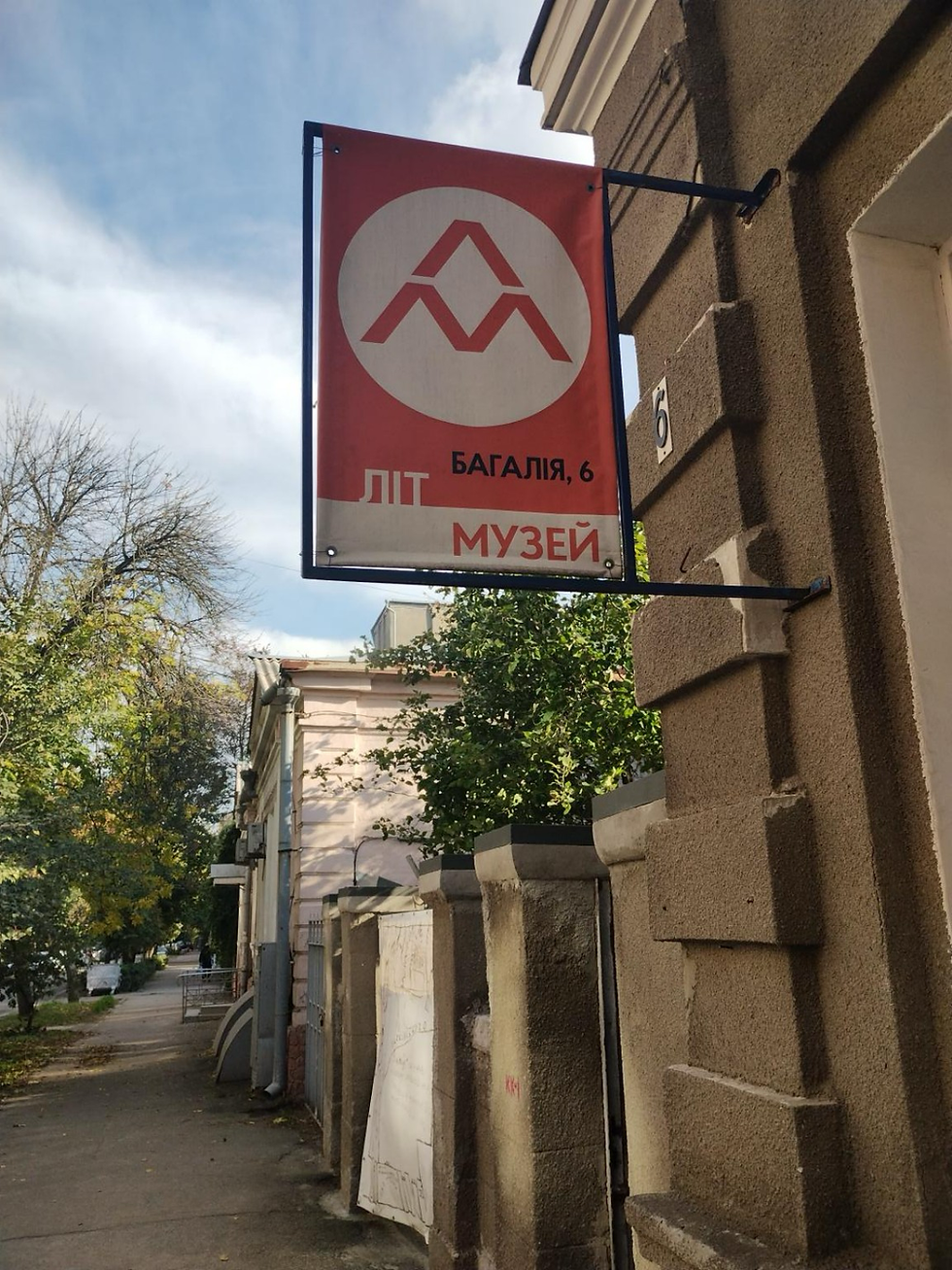
The sign outside is modest: ЛІТ МУЗЕЙ, the Literary Museum. Behind it lies one of the more extraordinary collections in Ukraine. The museum holds more than 30,000 objects in its principal collection and approximately 17,000 additional objects in its research collection. Among them are manuscripts, correspondence, photographs, periodicals, personal possessions and books carrying the autographs of some of the greatest Ukrainian writers of the twentieth century. There is Mykola Khvylovy, Mike Johansen and Mykola Kulish; there is Les Kurbas’s passport, the seal of VAPLITE and even doors preserved from the former House of Literature named after Vasyl Blakytny.
These things matter because so many of the people to whom they belonged were deliberately erased.
Kharkiv when literature mattered
To understand the museum, one has first to understand a Kharkiv that is surprisingly difficult to imagine today. In the 1920s Kharkiv was the capital of Soviet Ukraine, and for a brief, extraordinary period it became one of the most intellectually adventurous cities in Eastern Europe. Writers, poets, playwrights, theatre directors, artists and intellectuals gathered here. Ukrainian modernism flourished amid experiments in literature, theatre, architecture and political thought.
This was not some provincial appendix to Russian culture. It was an assertively Ukrainian cultural movement, although many of its participants naturally inhabited Kharkiv’s multilingual environment. The writers of the period were trying to answer an immense question: what might modern Ukrainian culture become if it were permitted to develop on its own terms?
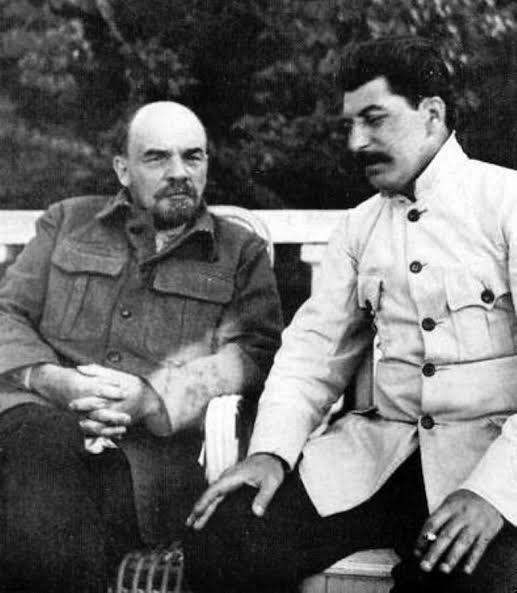
The Soviet authorities initially tolerated and to some degree encouraged Ukrainianisation. That tolerance did not last. Stalin’s consolidation of power transformed cultural experimentation into political suspicion. Independent Ukrainian intellectual life increasingly appeared dangerous precisely because it was independent. Writers were arrested, interrogated, imprisoned and executed. Their books disappeared from libraries and their names were removed from respectable public discussion.
The generation subsequently acquired the terrible and appropriate name the Executed Renaissance — Розстріляне відродження.
The museum’s collections are particularly strong precisely in this period, alongside materials relating to the Ukrainian cultural resistance of the 1960s to 1980s and the intellectual revival surrounding Ukrainian independence. Some of its holdings are works that were prohibited altogether in the Soviet Union.
This makes the museum something more interesting than a collection of literary memorabilia. It is an archive of an attempted cultural murder.
A museum that the Soviet system could not comfortably permit
There is a curious symmetry in the museum’s own history. Kharkiv first acquired a Museum of Literature in December 1932, housed in the Shevchenko Research Institute. This was almost exactly the wrong moment in Soviet history to establish an institution devoted to preserving the Ukrainian literary world. The repression of Ukrainian writers was beginning in earnest and, as the present museum rather delicately puts it, the continued existence of a literary museum became “inappropriate”.
That word conceals a great deal.
A museum preserves names. It keeps manuscripts. It establishes relationships between people and ideas. It enables later generations to discover who influenced whom, what people wrote before censorship intervened and what intellectual possibilities once existed. A totalitarian system engaged in rewriting cultural memory has an obvious problem with such institutions.
The idea nevertheless refused to disappear. After the Second World War, Kharkiv writers repeatedly proposed establishing a literary museum. The effort continued for decades. Only during the loosening of Soviet controls in the late 1980s did the project finally become possible. The present Kharkiv Literary Museum was established in 1988, largely through the persistent efforts of Iryna Grigorenko, who became its first director.
Its staff immediately began collecting material about the very period Soviet historiography had done so much to obscure: the Ukrainian cultural explosion of the 1920s and its destruction during the 1930s.
That decision gave the museum its character.
The house on Bahaliia Street
The building itself participates quietly in the story. Bahaliia Street emerged during the second half of the nineteenth century and was once called Biserivska, later becoming Tekhnolohichna and, during the Soviet period, Frunze Street. The museum’s house was constructed around the turn of the twentieth century in connection with Georgy Shtorkh, an artist and architect; another account records a major reconstruction by architect Yulii Tsaune in 1902. During the Soviet era it served for a period as a closed hotel for Communist Party officials.
There is a pleasing historical irony in this transformation. A building once reserved for the functionaries of the system eventually became a repository for the memories of people that system tried to silence.
The street itself now bears the name of Dmytro Bahalii, the great historian of Kharkiv and Sloboda Ukraine. The museum sits at number 6 behind the red and white sign visible in the photograph accompanying this article. It does not possess the monumental architecture that announces a great national institution. One can walk past it remarkably easily.
Perhaps that is appropriate. Much of what the museum contains survived precisely because somebody quietly kept it.
The objects that survived their owners
Literary museums face a peculiar difficulty. Paintings can be hung on walls and archaeological objects placed in cases, but literature fundamentally consists of words. A first edition behind glass does not automatically convey why its author mattered.
Kharkiv’s Literary Museum solves part of this problem through the intimacy of its collection. An author’s handwriting turns literature back into human activity. A passport restores bureaucratic reality to somebody who has become a historical name. A letter reminds us that celebrated writers once worried about ordinary things. A pair of spectacles reminds us that an intellectual movement consisted of physical people who ate, argued, fell in love, became frightened and eventually faced the machinery of the state.
Among the museum’s holdings is Pavlo Tychyna’s pince-nez. There are manuscripts associated with Khvylovy, Ivan Dniprovsky and contemporary Kharkiv writer Serhiy Zhadan. There are annotated periodicals, correspondence and photographs. The VAPLITE seal recalls the Free Academy of Proletarian Literature, one of the organisations around which Kharkiv’s remarkable literary culture crystallised.
Such objects acquire a different meaning once one knows what happened next.
Mykola Khvylovy committed suicide in Kharkiv in May 1933 amidst the mounting arrests of his colleagues and the catastrophe of the Holodomor. Mykola Kulish was arrested and ultimately executed at Sandarmokh in 1937. Les Kurbas, one of the great innovators of European theatre and the director associated with Kharkiv’s Berezil theatre, was murdered there as well. Mike Johansen was arrested in 1937 and executed in Kyiv later that year.
The list goes on until individual tragedy begins to resemble administrative procedure.
The Ukrainian Golgotha
When the museum was finally able to speak openly about these events, it did so forcefully. In 1991 it opened an exhibition called Ukrainian Golgotha, devoted to writers killed during the Stalinist repression. According to the museum’s own history, this was the first large-scale museum presentation in Ukraine devoted to what became known as the Executed Renaissance. The 1920s have remained central to its work ever since.
This was important because the Soviet destruction of Ukrainian culture involved two processes. The first was physical: people were killed, imprisoned or terrorised into silence. The second was epistemological: later generations were prevented from knowing properly what had been destroyed.
The second process can outlive the first by decades.
A murdered writer can eventually be rehabilitated. His name can be restored to an encyclopaedia. His books can be republished. Yet cultural continuity is harder to reconstruct. Had Khvylovy, Kulish, Johansen, Kurbas and their contemporaries been allowed to live and work, whom would they have taught? What schools of literature and theatre would they have established? What books would their students have written? What would Ukrainian modernism have looked like by 1950 or 1970?
Nobody can know, because the chain of intellectual inheritance was deliberately broken.
That is one reason museums such as this matter. They cannot restore the missing generations, but they can reconnect the surviving ends of the chain.
From Khvylovy to Zhadan
The Literary Museum did not become a mausoleum. This is perhaps its most significant achievement.
During the 1990s it developed into a meeting place for Kharkiv’s emerging independent Ukrainian cultural community. Artists, students, writers and members of civic organisations gathered there. The poetry circle Chervona Fira included a young Serhiy Zhadan, who would become one of contemporary Ukraine’s most internationally recognised writers. The Arabesky theatre studio was founded there under Svitlana Oleshko. Manuscripts and samizdat materials from this post-Soviet cultural revival have themselves now entered the museum’s collection.
There is something unusually satisfying about this continuity. A museum established partly to recover the suppressed literary culture of Kharkiv became itself a place in which the city’s next literary generation could develop.
The museum therefore challenges the conventional distinction between preserving culture and creating it. Culture is not preserved merely by keeping objects at the correct humidity. It survives when one generation becomes curious about another.
War comes again
Then history returned to Kharkiv in its most brutal form.
A substantial reconstruction of the museum, designed by Kharkiv architect Oleg Drozdov and intended to provide modern museum infrastructure, was planned for 2022. Russia’s full-scale invasion prevented it. Yet the museum has continued its activities during the war and continues to promote the culture of Slobozhanshchyna within Ukraine and abroad.
This circumstance gives the museum an uncomfortable contemporary relevance. Its collections document an earlier attempt by an imperial political system centred in Moscow to constrain, subordinate and ultimately destroy manifestations of autonomous Ukrainian culture. Today Kharkiv is again subjected to violence emanating from Moscow, although in radically different historical circumstances and by different mechanisms.
One should resist excessively simple historical analogies. Putin’s Russia is not Stalin’s Soviet Union, and the circumstances of the 1930s cannot simply be superimposed upon those of the 2020s. Nevertheless there is an unmistakable continuity in the question posed to Kharkiv: whether Ukrainian cultural identity here is something authentic and autonomous or something that must ultimately be subordinated to a Russian political and cultural conception of the city.
The existence of this museum supplies a great deal of evidence with which to think about that question.
Kharkiv’s argument with itself
Kharkiv is a particularly fascinating Ukrainian city because its identity has never been simple. It is industrial and intellectual, Ukrainian and historically heavily Russophone, Soviet in much of its physical appearance yet increasingly conscious of cultural traditions that predate and contradict the Soviet narrative. It has produced scientists, engineers, poets, soldiers, dissidents and revolutionaries. Its history stubbornly refuses ideological tidiness.
The Literary Museum is valuable precisely because it does not require Kharkiv’s history to be tidy. Instead it preserves evidence.
That distinction is important. Nations emerging from imperial domination sometimes succumb to the temptation to replace one simplified history with another. The better response is not to manufacture a more convenient mythology but to recover the sources that allow people to encounter their history in all its contradictions. Manuscripts, letters, magazines, photographs and personal possessions are useful precisely because they existed before our contemporary arguments about what the past ought to mean.
They allow the dead to complicate the stories the living tell about them.
Why this small museum matters
There are larger museums in Kharkiv and grander buildings. Yet the Literary Museum occupies an unusual place in the intellectual geography of the city because it contains evidence of something the Soviet state almost succeeded in making impossible to remember.
Its history contains a remarkable sequence. A literary museum was created in 1932. Writers were repressed and the institution disappeared. For decades people tried to recreate it. In 1988 they finally succeeded. In 1991 the museum publicly displayed the history of the murdered generation. During the following decades it became a home for another generation of Ukrainian writers. In 2022 another war arrived, and the institution continued.
There is an obvious lesson in this, although perhaps not the one usually associated with museums.
Political systems tend to imagine themselves permanent. Literature knows better.
Governments collapse, street names change and official histories are rewritten. A manuscript survives at the bottom of a drawer. Somebody keeps a photograph. Somebody else refuses to throw away a letter. Fifty years later another person finds it, catalogues it and places it in a museum. Eventually a young writer walks through the door and discovers that people living in the same city a century earlier were wrestling with many of the same questions of language, Europe, Russia, freedom and Ukrainian identity.
At 6 Bahaliia Street, this process has become an institution.
The Kharkiv Literary Museum is therefore not principally a museum about dead writers. It is a museum about the failure of enforced forgetting. That makes it one of the quieter but more compelling places through which to understand Kharkiv — and, in the middle of another war over Ukraine’s right to determine its own cultural and political existence, one of the most contemporary.
The museum’s official visitor information currently gives its address as 6 Bahaliia Street and opening hours of Wednesday to Sunday, 10:00–18:00. Because wartime arrangements can change, visitors should check with the museum before travelling. Be sceptical, as it is not obvious that the museum is ever open save by prior appointment during the current circumstances. Contact the Lviv Herald if you wish to try to make an appointment.