The Weight of Words: ‘Slava Ukraini’, the Dead and the Uses of History
By Matthew Parish
Sunday 4 October 2026
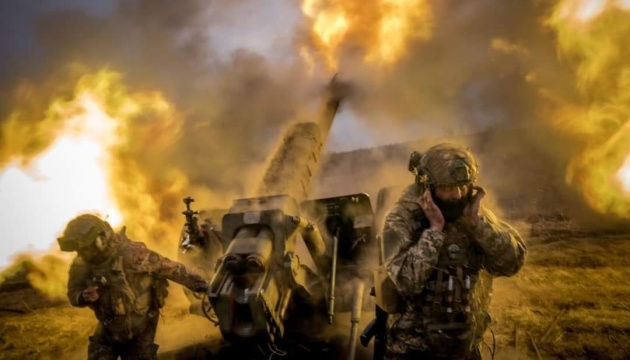
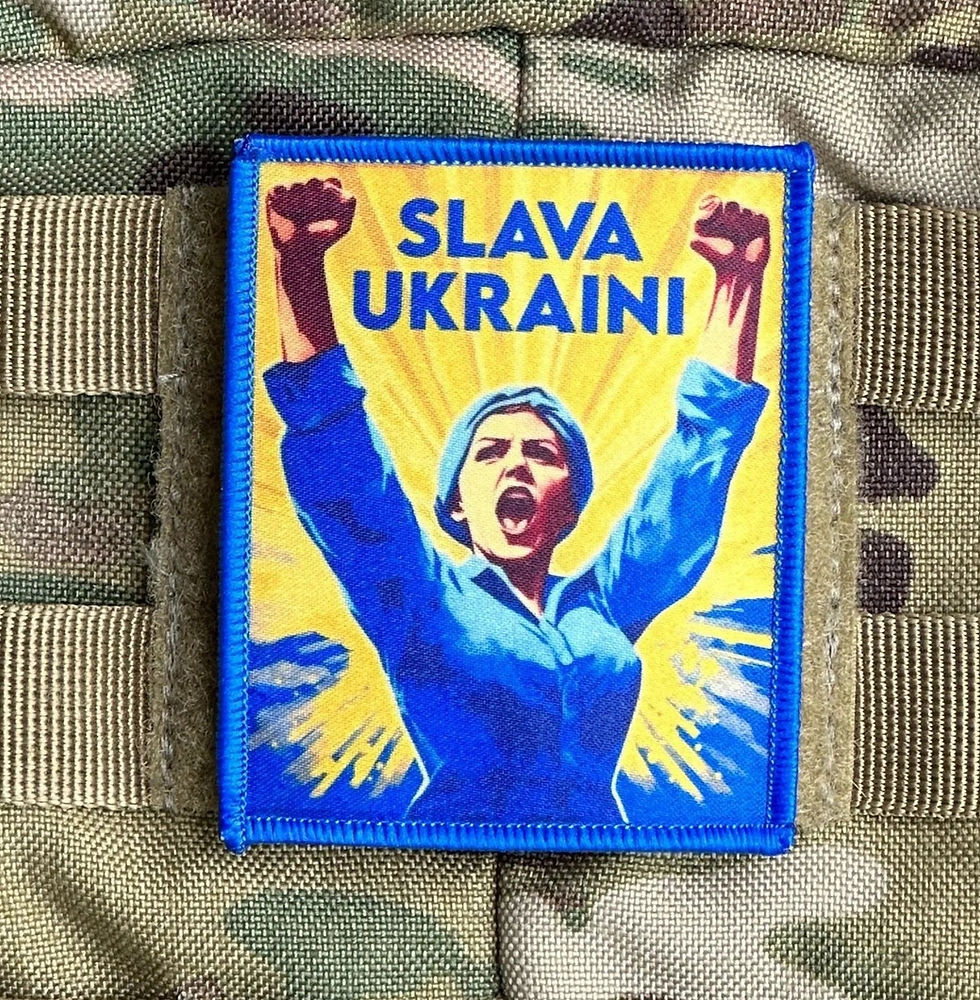
There are phrases that become so familiar in wartime that their familiarity conceals their gravity. Slava Ukraini — ‘Glory to Ukraine’ — is one of them. Since Russia’s full-scale invasion it has travelled around the world, spoken by presidents, soldiers, foreign volunteers, journalists and ordinary people wishing to express solidarity with Ukraine. Within Ukraine it can be heard everywhere from railway stations to military checkpoints. It is also formally embedded in the ceremonial language of the Ukrainian Armed Forces: legislation adopted in 2018 prescribed Slava Ukraini and the response Heroiam slava — ‘Glory to the Heroes’ — in military usage
Precisely because the expression has become ubiquitous, however, there is a danger of forgetting what it means. Slava Ukraini is not the Ukrainian equivalent of ‘cheers’. Nor, in its contemporary wartime setting, should Heroiam slava be understood merely as an enthusiastic expression of national pride. The heroes invoked by the response include people who have died. Since the Revolution of Dignity and still more powerfully since 2022, the expression has become inseparable from remembrance of those who sacrificed their lives for Ukraine. Historical scholarship on the Maidan has observed precisely this transformation: the heroes increasingly came to signify those who had fallen for the country’s democratic and European future.
This gives the words something of the character of a secular liturgy. When a soldier says Slava Ukraini and another person replies Heroiam slava, the exchange may carry memories of comrades who are no longer alive. In contemporary Ukraine virtually everybody knows somebody who has been killed, wounded, displaced or otherwise transformed by the war. Photographs of the dead appear on city streets. Military funerals interrupt the ordinary rhythms of urban life. Cemeteries have acquired expanding military sections. Against this background, ‘Glory to the Heroes’ can have a significance quite different from that perceived by a foreign visitor who has learnt the expression as a convenient means of demonstrating affection for Ukraine.
That is why drunken use of the expression can be uncomfortable. Alcohol and patriotism have accompanied armies for as long as armies have existed, and nobody should expect soldiers emerging from terrifying conditions to behave like diplomats at a memorial service. A soldier raising a glass to dead comrades may have earned an intimacy with the words that an outsider cannot readily comprehend. Nevertheless there is a difference between a toast made in remembrance and transforming Slava Ukraini into the verbal accompaniment to an evening’s intoxication, shouted repeatedly because everyone is becoming progressively more excited.
The distinction is one of context rather than prohibition. Nobody owns these words and there is no etiquette committee competent to determine when they may be spoken. Yet foreigners in Ukraine might sensibly exercise particular restraint. If a Ukrainian soldier insists upon raising a vodka glass and crying Slava Ukraini, refusing him on grounds of historical fastidiousness might itself be absurdly insensitive. One may raise the glass, answer Heroiam slava and understand that behind what superficially resembles drunken exuberance there may be grief, survivor’s guilt, comradeship and memories that will never be explained to the stranger sitting opposite.
What is less attractive is mimicry. A foreigner who discovers that shouting Slava Ukraini produces cheers in a bar may be tempted to repeat the trick. After several vodkas the phrase can become progressively louder and increasingly detached from meaning. At that point something solemn is being converted into entertainment. The problem is not that alcohol has touched patriotism; Ukrainians themselves frequently combine the two. It is that the outsider may be borrowing somebody else’s sacrifice as a prop for his own evening.
History introduces a further complication. It is sometimes asserted, particularly in Russian propaganda, that Slava Ukraini — Heroiam slava is intrinsically a ‘Banderite’ or fascist expression. The historical record is considerably more complicated. Forms of Slava Ukraini predate Stepan Bandera and the Organisation of Ukrainian Nationalists. Ukrainian historical research traces variants to Ukrainian circles around the turn of the twentieth century and to forces of the Ukrainian People’s Republic during the struggle for independence after 1917. The particular call-and-response formula Slava Ukraini — Heroiam slava was subsequently adopted by Bandera’s wing of the OUN in 1941 and was also used by the Ukrainian Insurgent Army.
Symbols change their meanings. The fact that a phrase was employed by a particular political movement at one moment in history does not permanently confer ownership upon that movement. During the Maidan the greeting acquired a much broader civic significance, and in contemporary Ukraine it has become an expression of national resistance encompassing people whose political opinions would have been utterly alien to the ideological world of the interwar OUN. Treating every contemporary utterance of Slava Ukraini as an endorsement of Bandera therefore collapses a century of Ukrainian history into a single episode.
Yet precisely the opposite mistake should also be avoided: pretending that Bandera is historically uncomplicated merely because Russia has grotesquely exploited his image for propaganda purposes. Stepan Bandera remains one of the most divisive figures in the history of eastern Europe. For many Ukrainians, particularly in western Ukraine, he represents uncompromising resistance to foreign domination. For many Poles, Jews and others, the OUN tradition with which he was associated evokes political violence, radical ethnonationalism and some of the darkest episodes of the twentieth century. Historians continue to dispute questions of personal and organisational responsibility, while the historical record also includes Bandera’s imprisonment by Nazi Germany after his movement proclaimed Ukrainian statehood without German approval. None of this produces a simple morality tale.
For that reason casual references to Bandera can be especially inappropriate in international company. To shout his name as though it were merely an intensified version of Ukrainian patriotism is to introduce a historical argument that many of the people present may neither share nor wish to have. It is particularly insensitive in the presence of Poles, for whom memories surrounding the OUN and UPA are profoundly different from those cultivated in parts of western Ukraine. Polish historical institutions attribute grave responsibility to the OUN-B and associated nationalist formations for mass violence against Polish civilians, while Ukrainian national memory contains sharply different emphases upon anti-Soviet and independence struggles.
Alcohol makes this still more hazardous. Historical nuance is among the first casualties of drunken conversation. After the fourth vodka nobody is likely to embark upon a careful distinction between Bandera’s personal responsibility, OUN-B ideology, the UPA’s later activities, German occupation policy, Soviet repression and competing Polish and Ukrainian historical memories. A name carrying an enormous burden of twentieth-century violence instead becomes a tribal password. At precisely that point it ceases to illuminate history and starts merely dividing the room.
There is also something unnecessary about invoking Bandera when honouring contemporary Ukraine. The soldiers defending Kharkiv, Kramatorsk, Pokrovsk and countless villages along the front do not require validation from a political activist born in 1909. Their legitimacy derives from something much simpler: they are defending their country and the people who live in it. Ukraine’s contemporary struggle is sufficiently momentous to possess its own heroes. It does not need every historical controversy of the twentieth century strapped to its back.
This is perhaps the most important distinction between Slava Ukraini and inappropriate invocations of Bandera. The former has escaped the confines of the political movement that once employed one version of it. It now belongs to a vastly broader Ukrainian civic vocabulary. Bandera, by contrast, remains a particular historical person whose name inevitably carries particular political and historical associations. Conflating the two inadvertently assists the Russian narrative that contemporary Ukrainian identity is merely a continuation of interwar radical nationalism, when the reality of modern Ukraine is immeasurably more diverse.
There is nevertheless no need to become pompous about any of this. Ukraine remains a living country rather than a permanent memorial ceremony. Soldiers laugh, swear, drink, dance and behave absurdly. They do these things partly because human beings cannot endure years of war while maintaining perpetual solemnity. A man who has spent months under artillery fire is entitled to shout Slava Ukraini over a vodka if that is how he wishes to celebrate being alive. The civilian or foreign visitor should hesitate before lecturing him about decorum.
The better principle is humility. When somebody says Slava Ukraini, answer Heroiam slava and remember, however briefly, what the words may mean to the person saying them. When drinking, resist turning them into a meaningless chant merely because the room responds enthusiastically. And when somebody begins introducing Stepan Bandera into proceedings, remember that a complicated historical figure is not improved by vodka, shouting or slogans.
Ukraine has accumulated enough dead that her language of honour deserves care. Slava Ukraini can be joyful, defiant, military, affectionate or solemn, sometimes all at once. But beneath each of those meanings lies the knowledge that the freedom to utter the words has been purchased at an appalling price. The appropriate response is not humourlessness. It is respect.
Perhaps that is ultimately what Heroiam slava asks of us. Glory to the heroes does not require that we agree about every episode in Ukrainian history or turn controversial historical personalities into saints. It asks us to remember the living and the dead who have borne the burden of Ukraine’s struggle for survival. Even in a bar, even over vodka and perhaps especially when everybody has had too much to drink, some words are worth remembering before they are shouted.