


The Price of Patriotism: Financing Ukraine’s Defence in a Time of Global Uncertainty
- Aug 25, 2025
- 3 min read
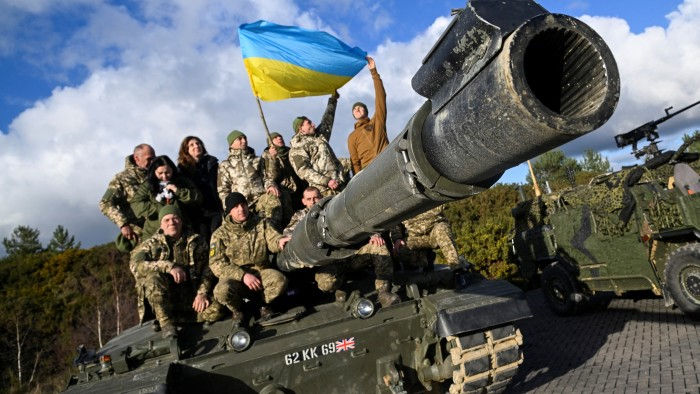
Wars are sustained not only by courage and weapons but by money. The defence of Ukraine, now in its fourth year of full-scale invasion, depends upon the mobilisation of financial resources as much as it does upon the mobilisation of soldiers. Yet as global uncertainty grows—with elections shifting political landscapes, economic headwinds buffeting allies, and new crises demanding attention—the cost of Ukraine’s patriotism raises urgent questions. How can a nation at war continue to finance her survival when the world’s attention wavers?
The Domestic Burden
Ukraine’s budget for defence now consumes more than half of state expenditure. Taxes are collected unevenly across territories, with vast swathes of occupied land removed from Kyiv’s fiscal base. Emergency war bonds and extraordinary levies on profitable sectors, particularly agriculture and mining, have been introduced. Citizens contribute through direct donations to the armed forces, through voluntary crowdfunding of equipment, and through the quiet acceptance of inflation and austerity.
This domestic burden has a moral quality: Ukrainians know their money directly sustains their defenders. Yet it also carries social costs. Hospitals and schools struggle with underfunding, infrastructure projects are indefinitely postponed, and a generation grows accustomed to a state that must channel its entire economic bloodstream towards survival. Patriotism, for many families, is measured not only in the loss of loved ones but in the emptying of savings and the contraction of opportunity.
The International Dimension
The lifeline of Ukraine’s war economy remains external support. The United States, the European Union, Britain and other partners have funnelled billions in financial aid, arms supplies and humanitarian relief. These flows, however, are contingent upon political will abroad. American elections have raised questions about continuity, while European publics wrestle with energy prices and defence spending of their own. Every debate in Brussels or Washington becomes a tremor in Kyiv, for it is understood that without foreign funds the arsenal dries up and the budget collapses.
The difficulty lies in convincing allies that Ukraine is not a drain but an investment: an investment in European security, in the integrity of international law, and in the stability of the global order. Yet in a time of mounting crises—the Middle East in flames, Asia on edge, inflation persistent—securing that conviction becomes ever more arduous.
Innovations in Financing War
Faced with these challenges, new mechanisms are being considered. One is the redirection of frozen Russian assets: vast reserves held in Western banks could be transferred to Ukraine, turning aggression’s profits against the aggressor. Another is the deepening of joint production lines: Western defence industries partnered with Ukrainian firms, creating jobs and output locally while sharing costs and risks. A third is long-term reconstruction bonds, backed by European and international guarantees, which would tie Ukraine’s future prosperity to present resilience.
Even more radical proposals involve private-public partnerships in energy and technology, where Ukraine’s resources and talent are exchanged for direct defence investment. Each of these methods reflects the urgency of broadening the sources of financing, so that the price of patriotism is not borne disproportionately by the exhausted state budget or the wavering generosity of partners.
The Cost Beyond Money
Finance is not only numbers. It is also the psychology of endurance. Ukrainians have shown a willingness to accept privation in order to preserve independence. But morale depends upon credibility: soldiers in trenches and families under bombardment must believe that sacrifice is not in vain. Financial support, therefore, is more than material; it is a signal of solidarity, reassurance that Ukraine is not fighting alone. When funds falter, so too does confidence, and confidence is itself a weapon of war.
The Calculus of Commitment
The price of patriotism in Ukraine is measured in hryvnias and dollars, in roubles denied to Moscow, and in euros spent on shells. But it is also measured in the quiet resilience of citizens, in the choices of allies, and in the ability of the world to perceive that this war is not merely Ukraine’s, but a frontline of global stability.
In a time of uncertainty, financing Ukraine’s defence becomes a test of priorities. If the free world is unwilling to bear the cost now, it may find the cost far higher later—when aggression left unchecked spreads beyond Ukraine’s borders. Patriotism is costly; but the absence of it, history reminds us, is costlier still.


