The Last Mile: Bringing Aid from Kharkiv to Balaklia’s Elderly
By Matthew Parish
Tuesday 6 October 2026
There is a tendency, when discussing humanitarian assistance in Ukraine, to think in enormous numbers. Governments announce packages worth hundreds of millions of euros. International organisations publish statistics recording tonnes of supplies delivered, thousands of beneficiaries reached and millions of dollars committed. Yet humanitarian assistance is ultimately meaningful only at the point at which somebody knocks on a door and hands an elderly person the food, medicine or household supplies that he or she needs. Between the international donor and that front door lies what humanitarian professionals sometimes call the ‘last mile’: the difficult, expensive and frequently dangerous business of getting assistance to the individual who actually needs it.
The work of the Kharkiv organisation Baga in delivering assistance to elderly people in Balaklia illustrates the importance of this last mile particularly clearly. Baga is one of the smaller organisations operating within the complicated ecosystem of humanitarian assistance in Kharkiv region. Its significance lies not in the enormous institutional structures associated with the largest international humanitarian organisations, but in something much simpler: people in Kharkiv obtaining supplies, loading vehicles and taking them to communities where elderly residents continue to live in difficult circumstances. The Lviv Herald has been unable to locate substantial reliable public documentation about Baga itself, and therefore does not propose to reproduce institutional claims about the organisation that cannot independently be verified. What matters for present purposes is the activity we have observed or been told about: humanitarian supplies being taken from Kharkiv to Balaklia for distribution amongst elderly residents.
Balaklia lies approximately 90 kilometres south-east of Kharkiv and has acquired an unhappy prominence during the war. Russian forces occupied the city during the opening stages of the full-scale invasion in 2022 and Ukraine recovered it during the extraordinary Kharkiv counter-offensive of September that year. Liberation did not, however, mean that ordinary life immediately returned. The legacy of occupation, damage to infrastructure, economic dislocation and the continuing insecurity of Kharkiv region created a collection of social problems that are particularly difficult for elderly people to overcome.
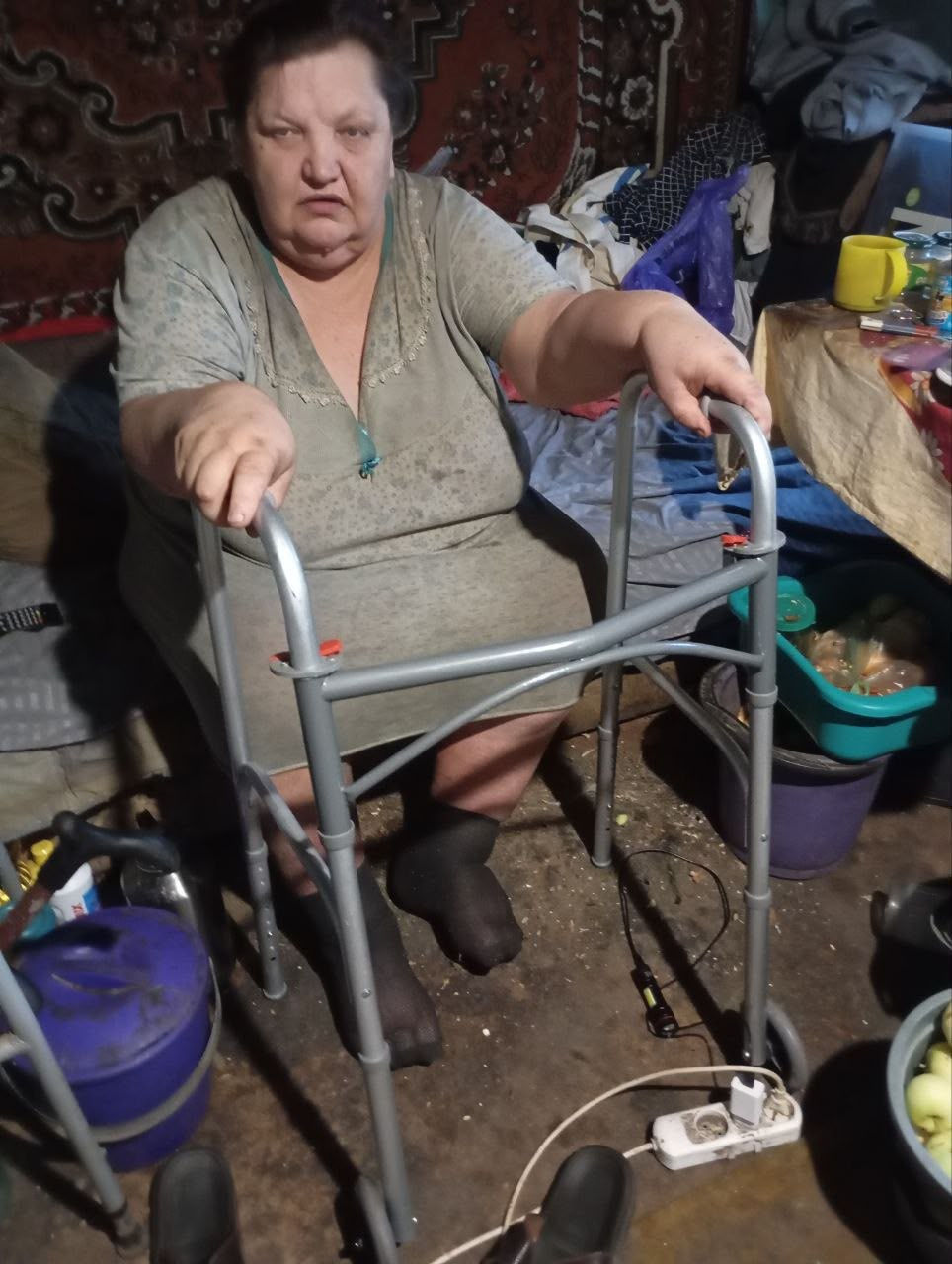
This is one of the less glamorous dimensions of war. Television cameras naturally concentrate upon soldiers, destroyed buildings and spectacular military events. Yet wars also produce quieter forms of suffering. An elderly woman living alone may discover that the shop she previously used has closed, that public transport is unreliable or that the value of her pension has been eroded by wartime prices. An elderly man with limited mobility may find that obtaining medicines or carrying groceries home has become a formidable undertaking. Family members who previously helped may have joined the Armed Forces, moved elsewhere in Ukraine or become refugees abroad. A person who was previously merely poor can thereby become extremely vulnerable without anything dramatic happening to him on a particular day.
That is why humanitarian deliveries aimed specifically at elderly people have an importance disproportionate to their monetary value. A bag containing food, hygiene products and household necessities is not a sophisticated humanitarian intervention. It does not require conferences in Geneva or elaborate theories of international development. Nevertheless, if its recipient is an elderly pensioner with limited mobility and very little disposable income, it may represent the difference between reasonable nutrition and going without meals towards the end of the month. Humanitarianism should ultimately be measured against consequences of this kind.
There is also an important distinction between delivering humanitarian assistance to a city and delivering it to people. Supplies arriving at a warehouse do not necessarily reach the most vulnerable residents. Elderly people may have difficulty travelling to distribution centres, standing in queues or learning when distributions are taking place. Some are reluctant to ask for assistance at all. The generation that grew up in the Soviet Union and lived through the chaotic economic conditions of the 1990s is often accustomed to extraordinary levels of self-reliance. Pride can become another obstacle to receiving help.
Small Ukrainian organisations can sometimes address these problems more effectively precisely because they operate informally and locally. They can identify individual recipients through personal networks, neighbours, municipal contacts and previous distributions. They can alter routes when circumstances change and carry assistance directly into residential districts rather than requiring beneficiaries to navigate complicated bureaucratic procedures. None of this eliminates the importance of accountability. Humanitarian organisations, however small, should maintain proper records, safeguard donations and ensure that assistance is distributed according to need. But bureaucracy should remain a means of ensuring humanitarian effectiveness rather than becoming an obstacle to it.
The journey from Kharkiv to Balaklia also represents something broader about contemporary Ukraine. Kharkiv itself remains a city living under the persistent threat of Russian attack, yet people living there continue to organise assistance for communities elsewhere in the region. This complicates the conventional distinction between humanitarian donor and humanitarian beneficiary. The same person can be both. A volunteer living in a Kharkiv apartment may spend the night sheltering from drones and the following morning load a vehicle with supplies for people who are still more vulnerable.
This phenomenon has become one of the defining features of Ukrainian civil society since February 2022. Much of the country’s resilience has depended upon informal or semi-formal networks that fill gaps faster than large institutions can react. Volunteers purchase vehicles, move generators, collect clothing, find accommodation for displaced people, deliver food and respond to particular needs communicated through telephone calls and messaging applications. The system can look chaotic from the perspective of an international development consultant. From the perspective of the person waiting for assistance, its virtues can be considerably more obvious.
Elderly people occupy a particularly difficult position within this wartime social structure. Younger Ukrainians can relocate more easily, find new employment or rebuild social networks in another city or country. For somebody aged 75 or 80, leaving home may mean abandoning almost everything familiar. The apartment, garden, neighbours and local streets may represent the physical geography of an entire adult life. Consequently some elderly people remain in places that younger relatives regard as dangerously close to the war. Their decision is not necessarily irrational. At an advanced age, security may mean familiarity as much as physical distance from the front.
Humanitarian organisations therefore confront a reality that cannot be solved simply by telling vulnerable people to move. Where elderly residents choose to remain, somebody must help sustain them. That means food and medicine, but it also means heating equipment, warm clothes, bedding, hygiene supplies and sometimes assistance with small domestic problems that would be trivial for a younger person. With another Ukrainian winter approaching, these apparently mundane requirements become increasingly urgent.
There is a psychological dimension as well. A humanitarian delivery is an act of communication. When volunteers arrive from Kharkiv, they demonstrate that somebody outside the recipient’s immediate household knows that he or she exists. For an elderly person living alone amid the disruptions of war, this may matter almost as much as the contents of the parcel. Loneliness is one of the least visible forms of wartime deprivation, particularly amongst people whose children and grandchildren have left Ukraine.
The assistance delivered by organisations such as Baga should therefore be understood not merely as the movement of goods but as maintenance of the social fabric. War fragments societies. It separates families, empties villages, destroys businesses and interrupts the ordinary relationships upon which vulnerable people depend. Humanitarian volunteering attempts, imperfectly and on a modest scale, to stitch some of those relationships back together.
There will eventually be a reconstruction of Ukraine measured in bridges, apartment blocks, power stations, schools and billions of euros. That reconstruction will be indispensable. But there is another reconstruction already taking place, one parcel and one journey at a time. It consists of maintaining the principle that an elderly person in Balaklia has not been forgotten merely because a war has transformed the world around them.
A vehicle leaving Kharkiv loaded with assistance may seem insignificant beside the vast machinery of contemporary warfare. In human terms, however, the comparison is misleading. Wars are fought across maps, but people live behind individual doors. Humanitarian assistance succeeds when somebody reaches those doors. That is the last mile. It is also, ultimately, the mile that matters most.