


Strikes on Iranian and Qatari natural gas fields - the economic consequences
Saturday 21 March 2026
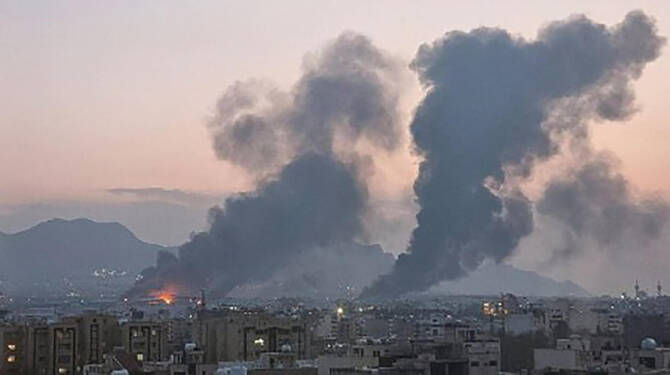
The missile strikes upon Iranian and Qatari natural gas infrastructure in March 2026 mark a profound escalation in the weaponisation of energy — a phenomenon that has long haunted global markets but rarely manifested at such scale against the world’s single most important gas basin. The shared South Pars–North Dome field, straddling Iranian and Qatari waters, is not merely a regional asset; it is the beating heart of global liquefied natural gas supply. To disrupt it is to unsettle the economic equilibrium of continents.
What follows is not a transient market shock but the re-emergence of energy insecurity as the central organising principle of the global economy.
The immediate shock: energy markets in convulsion
The first-order consequence of the strikes has been a sharp upward movement in hydrocarbon prices. Oil benchmarks surged above $108 per barrel within hours of the attack, reflecting fears that gas disruption would spill into oil substitution markets. European natural gas prices rose simultaneously, while global equities declined, signalling a classic flight from risk.
This reaction is rational. The targeted infrastructure lies within the largest known gas field on earth, and Qatar alone derives approximately 80 per cent of her state revenues from production there. When strikes caused “significant damage” to Qatar’s Ras Laffan industrial complex — the principal liquefaction hub for global LNG exports — the market did not merely price in disruption; it priced in systemic fragility.
The lesson is stark. Energy markets are no longer reacting to hypothetical geopolitical risks; they are responding to realised attacks upon core supply nodes.
Supply disruption and the LNG choke point
Natural gas differs from oil in one critical respect — it is logistically constrained. Oil may be rerouted by tanker; gas, especially LNG, depends upon fixed liquefaction terminals, specialised carriers and long-term contracts. Damage to facilities such as Ras Laffan therefore produces outsized effects.
Earlier phases of the conflict had already demonstrated this vulnerability. Temporary halts to Qatari gas production triggered force majeure declarations and sent global LNG shipping rates from $42,000 to over $250,000 per day within a week. Such volatility is not merely a shipping anomaly; it reflects a structural bottleneck in global energy logistics.
The present strikes compound that fragility. If production outages persist, Asian importers — including China, Japan and South Korea, which collectively account for the majority of Gulf LNG demand — will face acute shortages. Europe, already reoriented away from Russian pipeline gas, will find itself exposed to precisely the supply shock it sought to avoid after 2022.
Thus the destruction of a single industrial complex in Qatar reverberates through the heating systems of Berlin, the fertiliser plants of Poland and the electricity grids of South Asia.
Inflationary transmission: the return of energy-driven price instability
Energy is not merely a commodity; it is an input into almost all economic activity. Consequently, rising oil and gas prices transmit rapidly into inflation. Analysts already warn that sustained disruption could trigger a “damaging wave of global inflation”, echoing earlier projections that energy shocks from the conflict could add nearly one percentage point to global inflation.
The transmission mechanisms are multiple:
– Fuel costs increase transportation prices, raising the cost of goods globally
– Gas price rises feed directly into electricity markets, particularly in Europe
– Fertiliser production — heavily dependent on natural gas — becomes more expensive, pushing up food prices
Indeed, nearly half of global fertiliser feedstocks transit the same Gulf routes now under threat. The result is a cascading inflationary effect, reminiscent of the 1970s oil shocks but more globally synchronised.
Central banks are thereby placed in an impossible position — tightening monetary policy risks recession, while loosening it risks entrenching inflation.
Financial markets and the repricing of geopolitical risk
Beyond commodity markets, the strikes have triggered a broader repricing of geopolitical risk across financial systems. Equity markets have already shown signs of decline, while investors shift towards perceived safe havens.
Yet even traditional safe assets are not immune. If energy shocks persist, sovereign debt markets may face renewed stress as governments are forced to subsidise energy costs or cushion households from inflation. The fiscal burden of such interventions, already high in post-pandemic economies, may become unsustainable.
Moreover insurance markets — particularly for maritime transit through the Strait of Hormuz — will harden dramatically. Given that approximately 20 per cent of global oil and significant LNG volumes transit this corridor, even a partial disruption introduces systemic risk into global trade.
The consequence is subtle but profound: capital becomes more cautious, less mobile and more expensive.
Strategic realignments: energy security as foreign policy
The strikes accelerate an ongoing geopolitical shift — the securitisation of energy supply. States will increasingly view energy not as a commodity to be purchased efficiently but as a strategic asset to be secured politically.
Three trends are likely to emerge.
First, diversification will intensify. European states will double down on alternative LNG suppliers such as the United States and Norway, even at higher cost. Asian economies may deepen long-term bilateral arrangements, particularly with Australia and emerging African producers.
Secondly, stockpiling will return as a policy priority. Strategic gas reserves, once considered economically inefficient, will be re-established as buffers against supply shocks.
Thirdly, military considerations will increasingly shape energy infrastructure. Facilities once designed for efficiency will be redesigned for survivability — hardened, dispersed and defended.
In this sense the strikes mark not only an economic shock but a doctrinal shift.
The spectre of global recession
Should disruption persist, the cumulative effect of inflation, market volatility and constrained supply may tip the global economy towards recession. Analysts have already warned that prolonged strikes on Gulf energy infrastructure could “bring down economies of the world”.
This is not hyperbole. Modern economic growth is predicated upon stable, affordable energy. Remove that foundation, and growth falters.
The most vulnerable states will be those most dependent upon imported energy — South Asia, parts of Africa and energy-poor European economies. Yet even energy exporters may suffer, as volatility deters investment and destabilises fiscal planning.
Echoes for Ukraine and Europe
For Ukraine, the implications are both direct and indirect. Elevated energy prices strain European economies that underpin Ukrainian financial and military support. At the same time, higher hydrocarbon revenues for Russia — historically correlated with global price rises — may prolong her capacity to sustain war.
Thus strikes in the Gulf echo upon the battlefields of Eastern Europe. Energy and war, once again, are inseparable.
Energy shocks as the cause of recession, even depression
The attacks upon Iranian and Qatari gas infrastructure represent more than a regional escalation. They are an inflection point in the global political economy — a moment in which energy ceases to be assumed and becomes contested.
Markets have responded with volatility; governments will respond with strategy. Yet beneath these reactions lies a deeper truth. The global economy, for all her complexity, remains bound to a small number of physical systems — pipelines, terminals, shipping lanes — whose vulnerability is now laid bare.
In striking them, the combatants have revealed not only their military reach but the fragility of the modern world itself.


