


Serbian and Israeli cooperation over Israel's Elbit Systems drones
Friday 10 April 2026
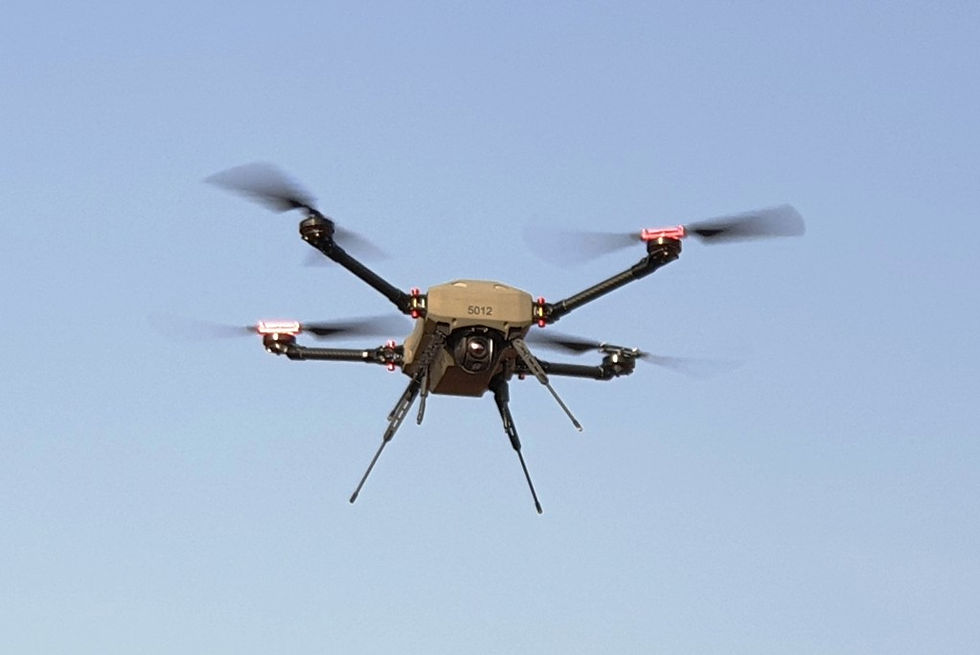
Serbia’s announcement that she intends to deepen cooperation with Israel's Elbit Systems in the production of unmanned aerial vehicles marks a subtle yet consequential shift in the military-industrial landscape of the Western Balkans. It is a development that sits at the intersection of regional insecurity, globalised defence supply chains and the accelerating centrality of drones in contemporary warfare — nowhere more evident than in Ukraine.
At first glance the partnership appears straightforward. Serbia has long sought to modernise her armed forces while preserving a delicate balance between East and West. She maintains historical, cultural and military ties with Russia, yet she has increasingly turned towards Western and Israeli defence technologies to compensate for the obsolescence of legacy Soviet-era systems. Collaboration with Elbit Systems — a firm with extensive experience in drone design, surveillance systems and electronic warfare — offers Belgrade access to proven, exportable and modular technologies that can be adapted to local production.
Yet the significance of this move lies not merely in procurement but in production. Serbia is not simply buying drones; she is attempting to embed herself within a transnational defence manufacturing network. This distinction is critical. Domestic production, even under licence or joint venture, allows for technological absorption, workforce training and the gradual accumulation of sovereign capability. In an era where drones have become as essential to battlefield operations as artillery once was, this represents a strategic investment in autonomy.
The example of Ukraine looms large over this decision. Since 2022 Ukrainian forces have demonstrated how relatively inexpensive unmanned systems can offset disadvantages in manpower and heavy equipment. From reconnaissance quadcopters to long-range strike drones, these technologies have reshaped tactical doctrine. Serbia, observing these developments closely, has drawn the inevitable conclusion: future conflicts in Europe — whether conventional or hybrid — will be fought as much in the electromagnetic spectrum and the lower airspace as on the ground.
For Israel the partnership reflects a broader pattern of defence diplomacy. Israeli firms, including Elbit Systems, have long leveraged their operational experience and technological sophistication to cultivate relationships in regions where great power competition remains fluid. The Balkans, situated between the European Union, Russia and the Middle East, present precisely such an environment. By anchoring herself within Serbia’s defence sector, Israel extends her industrial and strategic reach without the overt political commitments that accompany formal alliances.
However this cooperation is not without its tensions. Serbia’s balancing act — often described as a policy of “military neutrality” — becomes increasingly difficult to sustain as her defence partnerships deepen with Western-aligned actors. Moscow may view the transfer of Israeli technology, particularly in areas such as electronic warfare or precision targeting, as an erosion of her traditional influence in Belgrade. While Russia’s capacity to respond is constrained by her ongoing war in Ukraine, the symbolic implications should not be underestimated.
Moreover, the regional context is fraught. Serbia’s relations with Kosovo remain unresolved, and periodic crises along their administrative boundary continue to generate concern amongst NATO members. The introduction of domestically produced drones — potentially capable of surveillance or strike operations — adds a new dimension to this volatile equation. Even if intended primarily for deterrence, such capabilities risk fuelling an arms dynamic in which neighbouring states feel compelled to respond in kind.
There is also a question of export. Serbia has historically maintained an active arms industry, supplying a range of clients across Africa, the Middle East and Asia. Should drone production scale successfully, Belgrade may seek to position herself as a regional hub for unmanned systems, particularly for states unable or unwilling to procure directly from Western suppliers. This raises complex issues of end-use monitoring, technology proliferation and regulatory oversight — areas in which international norms remain underdeveloped.
From a technological perspective, cooperation with Elbit Systems suggests a focus on integrated systems rather than isolated platforms. Modern drones are not merely airframes; they are nodes within a broader architecture of sensors, communications links and data processing tools. Mastery of this ecosystem — rather than the mere assembly of components — will determine whether Serbia’s ambitions translate into genuine capability or remain dependent on external partners.
The economic dimension should not be overlooked. Defence manufacturing offers high-skilled employment and the potential for export revenues, both of which are attractive to a country seeking to stabilise her industrial base. Yet such benefits are contingent upon sustained investment, transparent governance and insulation from political volatility. The history of the Balkans is replete with ambitious industrial projects that faltered under the weight of corruption or shifting alliances.
Ultimately, Serbia’s drone partnership with Elbit Systems reflects a broader truth about contemporary warfare: the barriers to entry are lowering, even as the complexity of systems increases. States that once relied on imported hardware are now seeking to internalise at least part of the production process, thereby gaining leverage, resilience and strategic flexibility.
For Ukraine, watching from the crucible of active conflict, this development will be understood instinctively. The proliferation of drone capabilities across Europe is not an abstract trend but a lived reality — one that shapes daily operations along a thousand-kilometre front. Serbia, although not at war, is preparing for a future in which such technologies are indispensable. Serbia is undertaking a pronounced if understated geopolitical shift. She is known to have been undertaking quiet diplomacy with Ukraine, as well as quietly selling her arms via European third parties.
The new partnership is therefore less about Serbia and Israel alone than about the transformation of warfare itself as well as the European geopolitical theatre. Amongst these events the drone is no longer a peripheral instrument; it is becoming the organising principle of modern military power. Nations that recognise this — and act upon it — are positioning themselves for a strategic environment that is already taking shape.


