


Russia’s Winter Strike Strategy for 2025–26
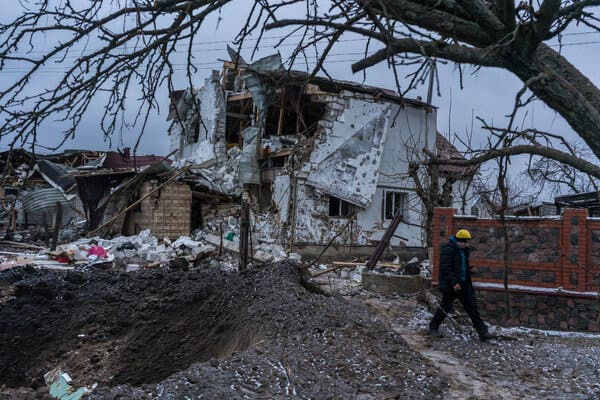
As winter returns to Eastern Europe, Russia has initiated yet another campaign of long-range strikes across Ukraine. This pattern, familiar since the winter of 2022–23 yet distinct in each subsequent year, has now become a structural feature of the war. The winter of 2025–26 is emerging as the most complex iteration to date, shaped by Russia’s shifting military constraints, Ukraine’s expanding industrial base, and the growing maturity of Western air defence support. Understanding Russia’s logic requires stepping back from the nightly catalogue of explosions and considering the strategic architecture that underpins these attacks.
The Kremlin’s overriding purpose is unchanged: to inflict cumulative damage upon Ukraine’s ability to sustain a modern war effort. Russia understands that Ukraine’s primary strengths lie in resilience, improvisation, and integration with Western supply lines. Since Russia has been unable to break Ukrainian command structures or seize decisive terrain on the battlefield, she has chosen instead to wage a war of systemic degradation, hoping that repeated shocks to Ukraine’s energy grid, industrial capacity, and civilian morale will erode the country’s capacity to resist.
Energy infrastructure remains the centrepiece of this strategy. The Kremlin’s view is that the Dnipro basin’s electrical substations and transmission nodes represent pressure points in a system already strained by previous winters. Weather alone will produce surges in consumption; targeted strikes at peak hours can collapse localised sectors of the grid, forcing rolling blackouts and expensive emergency reallocations. Russia’s engineers understand the Soviet-era design logic of the system better than most Ukrainian grid operators, because they were trained within the same frameworks. They know which nodes, if disabled, cascade into broader failures. The goal is not to plunge the entire country into darkness, a feat unlikely to be achieved given Ukraine’s hard-earned redundancy measures, but to generate chronic instability. This instability in turn forces Ukraine to divert resources from offensive military operations to maintaining basic living conditions for a population surviving another winter of war.
Yet the 2025–26 strike architecture is broader than energy. Russia is targeting Ukraine’s defence-industrial rise with greater precision and intent. Over the past two years Ukraine has transformed from an importer of key systems to a continental-scale producer of drones, mechanised components and guided munitions. Hundreds of private workshops, many operating from repurposed Soviet-era structures, now supply front line brigades. Russia’s intelligence services have belatedly grasped the significance of this dispersed production model. She therefore aims to destroy not only confirmed military sites but any industrial complex capable of hosting dual-use manufacturing. Cities such as Kryvyi Rih, Dnipro, Zaporizhzhia, Bila Tserkva, Vinnytsia, Poltava, Cherkasy, and Kremenchuk feature prominently in target lists because their industrial zones contain machine tools, metalworks, electronics shops, and heavy repair facilities.
The complexity of Russia’s munitions supply further shapes the winter strategy. Moscow cannot afford to expend her most sophisticated long-range missiles at the same rate as in 2022 and 2023, because replenishment remains inconsistent and sanctions continue to bite despite persistent evasion. Instead Russia has developed a multi-layered strike method. Cheap Shahed-type drones probe air defences and saturate Ukrainian radar capacity. Modified glide bombs, dropped from aircraft operating at safe distances, strike buildings and factories close to the front. Cruise and ballistic missiles are used more sparingly, reserved for targets deemed crucial to Ukraine’s national infrastructure. This multi-faceted approach is not evidence of Russia’s improved competence alone; it also reflects necessity. By mixing munition classes and complicating Ukrainian defensive calculations, Russia hopes to exhaust Ukrainian stocks of Western-supplied interceptors, forcing Kyiv to make choices about which regions and assets receive the highest levels of protection.
A subtler aspect of this winter’s strategy is psychological. Moscow seeks to widen the gap between Ukraine’s population and her governing institutions, not by propaganda alone but by engineering conditions under which frustration increases. If heating cuts occur in February, when temperatures are lowest; if rolling blackouts disrupt telecommunication; if transport corridors slow due to power shortages; and if private industry loses working days to energy outages, the Kremlin believes that Ukrainians may begin to question the sustainability of the war. Russia does not expect sudden capitulation. Instead, she seeks the gradual sapping of national energy, measured not only in kilowatts but in the public’s tolerance for hardship. It is a strategy born of Russia’s long history of attritional thinking: war is won by the side that endures longest, not the side that moves fastest.
Nevertheless this winter’s strategy faces substantial limitations. Ukraine has become proficient at repairing damaged sites within days, sometimes hours. Modular transformers, imported from Europe, provide a buffer against catastrophic failures. The grid’s topology has been redesigned to reduce the vulnerability of east–west transmission corridors. Western assistance has grown more focused, with the European Union and individual member states embedding technical teams directly into Ukrainian energy companies. Moreover citizen morale, while strained, has proved remarkably resilient. After nearly four years of war, Ukrainians no longer interpret strikes as signs of helplessness; they interpret them as further vindication of their struggle.
Russia’s logistics also impose constraints. The Kremlin must balance winter strikes against the needs of her front line. If she expends too many long-range munitions in the rear, she risks limiting her ability to impede Ukrainian operational manoeuvres in the east or south. Russia’s defence industry, though expanded, cannot indefinitely sustain high rates of missile production without compromising quality control or diverting resources from artillery manufacture. A war of industrial balances cuts both ways.
It is also essential to note that Russia’s winter strategy contains inherent political risks. Each strike that destroys a Ukrainian hospital wing or residential block further hardens Western opinion. The European public, once variable in its enthusiasm for supporting Ukraine, has increasingly come to view Russia’s energy-targeting tactics as acts of barbarism. This shift strengthens the case for deeper European military integration and long-term commitments to Ukraine’s defence-industrial base. In an ironic reversal, Russia’s strategy of coercion may accelerate the very processes she seeks to prevent: the consolidation of Europe’s strategic identity and the permanent embedding of Ukraine within Western security structures.
The winter strike strategy of 2025–26 represents Russia’s attempt to recalibrate a coercive method that is losing marginal effectiveness. She still seeks to degrade Ukraine’s energy grid, disrupt industrial production, stretch air defences, and wear down societal endurance. But Ukraine’s countermeasures are improving. The war’s industrial nature means that both sides adapt continuously, and winter is no longer a season of exclusive Russian advantage. What emerges instead is a harsher stalemate: a contest of repair crews and engineers as much as soldiers, a struggle over substations rather than trenches, and a winter in which strategic success is measured not by great battlefield movements but by the capacity to keep cities alight, factories working, and a nation confident in her future.


