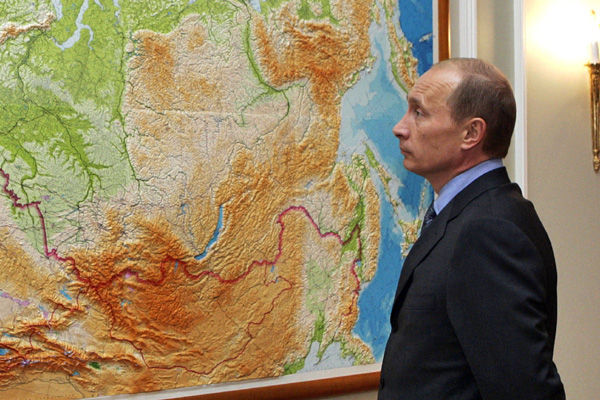
How long does Vladimir Putin have to live?
- Oct 2, 2025
- 6 min read

The question of how long a head of state may have to live is one fraught with uncertainty, speculation and a mixture of hard facts with softer conjecture. In the case of Vladimir Putin, the long-serving President of the Russian Federation, such an enquiry must encompass not only the conventional considerations of human biology—age, health and lifestyle—but also the extraordinary circumstances of his political position, the environment of risk that surrounds him, and the historical patterns of how rulers of his kind eventually come to their end. To answer the question in the broadest possible terms, one must blend demographic reasoning, medical probability, political science and the lessons of history.
Biological and Demographic Considerations
Putin was born in 1952, which makes him seventy-two years old in 2025. Life expectancy in Russia for men of his generation is low by Western standards, often below seventy, due in part to heavy drinking, smoking and limited health care provision. Yet Putin’s personal lifestyle appears atypical for a Russian man of his cohort. He is a non-smoker, careful with his diet, and famed for athletic pursuits, from ice hockey to judo to bare-chested horseback riding. He has also had access to elite medical care, both in Russia and reportedly abroad. On purely biological grounds, and assuming no serious hidden ailments, he could live another decade or more. Indeed, many world leaders of his age or older—Joe Biden, Donald Trump, Xi Jinping—remain active, albeit with varied levels of vigour.
The Problem of Rumours and Secrecy
One complicating factor is that Putin’s health is a matter of state secrecy. For years there have been persistent rumours of serious conditions: cancer, Parkinson’s disease, or even multiple heart operations. None of these claims has been verified, and Kremlin communications are opaque and unreliable. In autocracies, rumours of illness are often amplified, partly because they destabilise the regime and partly because they are impossible to disprove. Even if Putin were gravely ill, the Russian state apparatus would likely conceal this until his last days. Thus biological predictions remain shrouded in uncertainty.
Political Risks as a Factor in Longevity
Unlike an ordinary pensioner, Putin’s survival cannot be measured only in terms of health. Political risk plays an outsized role. Leaders who centralise power so completely often become inseparable from the systems they create. Their downfall may come not from natural mortality but from violent or forced removal. History provides a grim list: Nicolae Ceaușescu in Romania, Muammar Gaddafi in Libya, Saddam Hussein in Iraq. While Putin has surrounded himself with security, repression and a loyal elite, the war in Ukraine, sanctions, and growing dissatisfaction have introduced new vulnerabilities. Should he lose power, his personal survival could be jeopardised by rival factions or international prosecution. In such circumstances, life expectancy is bound not to years of biology but to the duration of his political dominance.
Historical Precedent
Russian rulers provide a mixed precedent. Joseph Stalin died at seventy-four, likely of natural causes but under conditions that may have involved political intrigue. Leonid Brezhnev lasted until seventy-five. Boris Yeltsin lived to seventy-six, although in retirement and with failing health. Putin’s own reign has already surpassed them all in terms of duration of power. Autocrats often outlive predictions of their demise, but when the end comes, it may be sudden.
The Balance of Forces
Putin’s life expectancy must therefore be framed by two competing dynamics:
Health and security: his careful lifestyle, guarded environment, and world-class medical access could sustain him into his eighties or even nineties.
Political peril: the dangers of coup, assassination, or catastrophic policy failure shorten that horizon dramatically. The longer the war in Ukraine drags on, the greater the chance of instability and personal danger.
A Range Rather than a Prediction
One cannot sensibly state how long Vladimir Putin will live in calendar years. Biologically, he might enjoy a natural lifespan extending another ten to twenty years. Politically, his survival is contingent on the stability of a regime that is under unprecedented pressure. The paradox of autocratic rule is that the body of the ruler and the body of the state become intertwined. Putin may live as long as his political system does; should that system collapse, his own life could end abruptly. Hence the best answer is that Vladimir Putin’s remaining years are bounded by the unpredictable intersection of health, secrecy, politics and history—forces that together ensure that his horizon, though potentially long, is precariously fragile.
----
Annex: Scenarios and Probabilities
The question of Vladimir Putin’s remaining lifespan cannot be confined to medical prognosis. It must also account for political fragility, historical precedent and the unique dangers that attend the life of an autocrat. In order to frame the possibilities more concretely, it is useful to set out several plausible scenarios, each with an approximate probability, acknowledging that such numbers are impressionistic but nevertheless help us weigh likelihoods.
Scenario One: Natural Death in Power
Putin is seventy-two years old. He maintains an unusually healthy lifestyle for a Russian man of his generation: no smoking, limited alcohol, exercise, and access to elite healthcare. Biologically, he could live another decade or two, dying in office as Joseph Stalin did at seventy-four, or as Fidel Castro did in his eighties. This is the “default” scenario: he simply outlasts his enemies, surrounded by secrecy and loyal guards.
Estimated probability: 35% – The most likely outcome in a purely actuarial sense, though contingent upon continued regime stability.
Scenario Two: A Palace Coup
Autocrats depend upon a narrow circle of elites whose interests must align with their own. If the war in Ukraine leads to military collapse, economic disintegration or existential threat to those elites, they may remove him. This could result in a quiet retirement, as with Khrushchev, or a more brutal erasure, as with Ceaușescu. Given the mounting strain of sanctions and war, this scenario grows increasingly plausible.
Estimated probability: 25% – A significant chance, particularly if military fortunes turn dramatically against Russia or elite unity fractures.
Scenario Three: Assassination
While the Kremlin devotes immense resources to Putin’s security, history demonstrates that even the best-guarded rulers can be killed by insiders or disaffected factions. The scale of his enemies—both domestic and international—cannot be ignored. However his isolation, his limited exposure to crowds, and his paranoia lower this probability compared to less cautious leaders.
Estimated probability: 10% – Possible, but less likely than subtler elite removal.
Scenario Four: Exile and Quiet Decline
Leaders occasionally negotiate exile in exchange for survival. Putin might, in theory, flee to China, Belarus or Iran if Russia became ungovernable. Yet his nationalist image and personal identification with Russian greatness make voluntary departure seem unlikely. Exile would also demand a willing host prepared to absorb the immense political consequences.
Estimated probability: 5% – Technically possible, but strongly at odds with his personality and the structure of his regime.
Scenario Five: Capture and Trial
The International Criminal Court has indicted Putin, and history has examples—Milošević, Saddam Hussein, Gaddafi—of rulers brought before justice or killed after capture. For this to happen, Russia’s state would need to collapse or transform radically, perhaps after military defeat. While this cannot be dismissed, it presupposes extraordinary upheaval inside Russia.
Estimated probability: 15% – A minority possibility, but one that grows if the war turns decisively against Moscow and a successor regime seeks international rehabilitation.
Balancing the Scenarios
These figures are not certainties but heuristics, drawn from precedent and contemporary conditions. Combined, they suggest that Putin’s biological longevity may not be the principal determinant of his fate. Rather, the political durability of the system he has created will decide how long he lives, and under what circumstances.
Most likely outcome (35%): natural death in power, in his eighties, shielded by the state.
Substantial risk (25%): removal by coup, which could shorten or merely obscure his life.
Meaningful risks (10–15%): assassination or international trial following regime collapse.
Marginal chance (5%): negotiated exile.
Conclusion
How long Vladimir Putin has to live is thus not a matter of calendar years but of contingent political outcomes. He may die in office after another decade or more, or he may be swept away suddenly by forces that overtake him. The probabilities suggest that, while natural death remains the most likely path, nearly two-thirds of the possibilities involve a politically induced end—violent, judicial or negotiated. His future is therefore precarious: not just a question of age, but of the war he began, the system he built, and the enemies he has made.