


Wetlands as Defence: Europe’s Experiments in Nature-Based Security
- Sep 3, 2025
- 4 min read
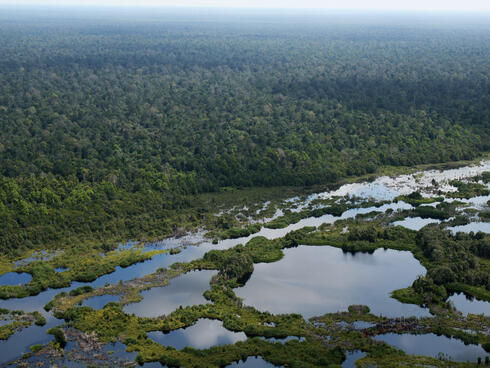
Across the borders of northern and eastern Europe, governments are revisiting an ancient idea: the use of natural landscapes as barriers to military invasion. In particular, a number of European Union states that share frontiers with Russia or Belarus are considering the deliberate reinstatement of “wet lands”—areas of swamp, marsh or flooded terrain that can obstruct the movement of troops and armour. This strategy draws upon both medieval precedent and modern ecological thinking. It offers a potential tool of deterrence and defence, but also raises questions about practicality, cost, and applicability to Ukraine’s war-torn front line.
What Are “Wet Lands” in a Security Context?
The term “wet lands” here does not refer simply to ecological wetlands, which are vital habitats for biodiversity. Rather, it denotes the deliberate engineering of landscapes so that rivers, marshes, and floodplains are restored or expanded in ways that make them impassable to heavy military equipment.
In practice, this can involve:
Reconnecting rivers to their natural floodplains.
Removing drainage systems that had previously converted marshes into farmland.
Constructing sluice gates, dams or dykes to control flooding at moments of crisis.
Encouraging natural swamp regrowth in low-lying frontier regions.
Historically such methods were used in the Low Countries, where Dutch engineers would flood polders to halt invading armies. During the Second World War, Soviet forces also flooded parts of their own territory to obstruct German advances. The concept is thus a hybrid of ecological restoration and military engineering, designed to exploit terrain as a defensive ally.
European Motivations: The Russian Threat
The revival of this strategy has been reported most notably in the Baltic states and Finland, where military planners are acutely aware of their vulnerability to Russian aggression. These countries face the daunting task of defending long, flat borders with limited depth. Traditional fortifications or permanent troop concentrations are costly, and NATO reinforcements may take time to arrive.
By reinstating wetlands along key approach routes—particularly in areas where tanks or mechanised columns might advance—these states hope to complicate Russian planning. Swamps and flooded plains force invaders onto narrower, more predictable corridors, where defensive forces can concentrate fire. They also reduce the mobility of heavy armour, potentially neutralising one of Russia’s main advantages.
The ecological aspect adds further appeal. Wetland restoration aligns with EU environmental goals, contributing to biodiversity, carbon storage and water management. Defence and sustainability thus merge in a politically palatable strategy.
Effectiveness in Military Terms
The defensive value of wetlands lies not in making invasion impossible, but in slowing and channelling it. Mechanised forces rely on firm ground and wide manoeuvre space. Marshy or flooded terrain can bog down tanks, limit artillery emplacement, and restrict supply convoys. Even modern tracked vehicles struggle in saturated soil.
However, effectiveness depends on several factors:
Scale: small patches of swamp are easily bypassed. Only large, continuous wetland belts can present serious obstacles.
Seasonality: in frozen winters or dry summers, wetlands lose much of their deterrent value.
Engineering countermeasures: modern armies can deploy bridging equipment, pontoon systems and amphibious vehicles, although these slow momentum and expose troops to defensive fire.
Preparation time: flooding requires control systems and advance planning. Once an invasion begins, it may be too late to alter landscapes quickly.
Thus wetlands are best seen as part of a layered defence: an attritional obstacle that buys time for mobilising reserves and receiving NATO support. They cannot be a substitute for strong conventional deterrence.
Could Ukraine Adopt This Strategy?
For Ukraine, the idea of reinstating wetlands along the front line with Russia is intriguing but complex.
Potential Advantages
On flat, open terrain such as in parts of the Donbas or around Kharkiv, engineered wetlands could complicate Russian armoured thrusts.
Flooded zones could stabilise defensive lines by forcing assaults into narrower channels.
In a protracted war of attrition, terrain denial offers a cost-effective supplement to scarce manpower.
Practical Challenges
Much of the contested front is already heavily damaged, with disrupted water systems, mined areas and destroyed infrastructure. Recreating controlled wetlands would be difficult under bombardment.
Ukraine’s rivers have strategic value for both sides, and deliberate flooding can harm civilian populations, as seen when the Nova Kakhovka dam was destroyed in 2023 by Russian forces. International opinion is wary of environmental warfare.
Unlike the Baltic states, Ukraine lacks the security to plan decades in advance. Wetland restoration requires years of engineering and ecological management; Ukraine faces urgent frontline demands.
Geopolitical Considerations
Western support for Ukraine emphasises adherence to humanitarian and environmental norms. Large-scale flooding as a defensive tactic might attract criticism unless carefully planned to minimise civilian harm.
Yet some measures—such as restoring floodplains in relatively secure areas behind the front—could both aid agriculture and create long-term defensive depth.
Historical Precedents for Ukraine
Ukraine is not unfamiliar with water as a weapon. During the Second World War Soviet forces deliberately breached dams in Ukraine to hinder German advances, albeit with devastating humanitarian consequences. In modern times, the flooding of the Dnipro following the Kakhovka dam explosion in 2023 showed both the power and the perils of water warfare.
A more constructive precedent might lie in the Netherlands, where wetlands have been integrated into national defence as part of the “Waterline” system. There, environmental engineering has created a landscape that can be flooded at will, but only under controlled conditions, minimising civilian harm. For Ukraine, adopting such a system along her eastern borders might become feasible in the post-war reconstruction phase, when long-term fortification is considered.
Wetlands as a weapon of defence?
The reinstatement of wetlands as a defensive barrier illustrates how European states are blending ecological restoration with national security. For countries bordering Russia, it is both a deterrent and a signal of preparedness: terrain will be weaponised, and invasion will not come easily. While wetlands cannot stop an aggressor outright, they can slow him, channel his movements, and buy precious time.
For Ukraine, the strategy is less immediately applicable given the urgency of her war and the devastation of her infrastructure. Yet in the longer term, as she plans for a secure border against a persistently hostile neighbour, the use of nature-based defences may form part of a layered security system. Wetlands will not replace tanks and missiles, but in a world where ecology and security increasingly intersect they may prove an unlikely but valuable ally in stabilising the frontier with Russia.


