


Ukraine’s Air Defence Evolution from Soviet Legacy to NATO Integration
- Jun 19, 2025
- 4 min read
Since 2014, and with even greater urgency following Russia’s full-scale invasion in 2022, Ukraine has transformed her air defence capabilities from a Soviet-inherited relic into a layered, increasingly interoperable system aligned with NATO standards. This transformation, born of necessity and sustained through partnerships, has reshaped the strategic calculus of the war and redefined Ukraine’s sovereignty in the air.
The Soviet Legacy: A Decaying Shield
When Ukraine inherited her share of the Soviet Union’s air defence systems in 1991, she possessed one of Europe’s largest arsenals. This included Soviet S-300 long-range surface-to-air missile systems, Buk-M1 medium-range systems, and man-portable air defence systems (MANPADS) like the Strela and Igla. Though formidable on paper, these systems were rapidly ageing by the time of the 2014 annexation of Crimea. Budget constraints, maintenance backlogs, and corruption had left radar coverage patchy, munitions outdated, and interconnectivity between platforms rudimentary at best.
Following the invasion of Crimea and the beginning of war in Donbas, Ukraine scrambled to reactivate decommissioned units, repair radar infrastructure, and retrain personnel. However, her reliance on legacy Soviet systems made her vulnerable to the advanced electronic warfare and cruise missile technologies employed by Russia. The downing of Malaysia Airlines Flight MH17 by a Russian-supplied Buk system in July 2014 served as a grim reminder of both the power and the peril of this outdated equipment in modern warfare.
2022 and the Birth of a New Doctrine
The full-scale Russian invasion in February 2022 brought air defence to the forefront of Ukraine’s military strategy. Russia launched thousands of cruise missiles, ballistic missiles and Iranian-made Shahed kamikaze drones against civilian infrastructure, command posts and energy grids. Ukraine’s response required more than just interception; it required integration, speed, and the ability to evolve in real time.
The Ukrainian Armed Forces began integrating donated Western systems with existing Soviet equipment in an ad hoc yet increasingly effective fashion. Older S-300 and Buk-M1 systems continued to down enemy aircraft and cruise missiles, while new arrivals — such as the German IRIS-T SLM, American NASAMS, French Crotale NG, and British Stormer HVM — introduced multi-layered defensive depth and precision.
Perhaps most remarkable was Ukraine’s ability to create a functioning hybrid air defence grid. Soviet-era radars were fused with Western systems through custom Ukrainian-built command and control software. This allowed for early warning across air corridors and timely deployment of interceptors. In addition, domestic defence firms contributed mobile radar systems, electronic warfare modules, and secure communications software — increasingly interoperable with NATO digital architecture.
Drone Warfare and the Evolution of Response
A major catalyst for change in air defence doctrine was the emergence of loitering munitions and drone swarms, which flooded low-level airspace and overwhelmed traditional systems. The use of Iranian Shahed-131 and 136 drones by Russia to target power substations and cities introduced a new kind of asymmetry: inexpensive, disposable drones attacking costly infrastructure.
Ukraine responded by developing a tiered drone defence strategy. This included everything from radar-directed anti-air missiles to infrared MANPADS, anti-drone electronic warfare units, and even civilian volunteer observers linked via mobile applications. In cities such as Kyiv, Odesa and Dnipro, mobile fire teams with Stinger and Starstreak systems now patrol rooftops during air alerts. Combined with a distributed radar network and increasing AI-assisted targeting data, these measures have significantly improved Ukraine’s interception rates.
Steps Towards NATO Integration
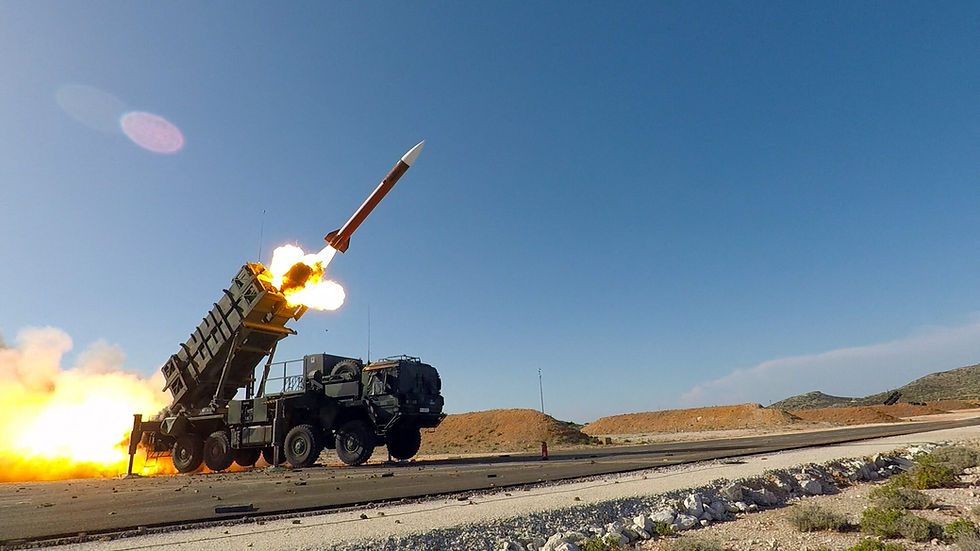
Ukraine’s goal of NATO integration has always implied a realignment of military standards, doctrine and interoperability. Air defence has emerged as a leading edge of this transformation. In 2023 and 2024, Ukraine received both systems and training from NATO members — not merely as a form of aid, but as an entry into a larger strategic dialogue. The training of Ukrainian crews on Patriot PAC-3 systems in Germany and the United States, for example, marked a watershed moment.
In addition, Ukraine’s experience with hybrid integration is now informing NATO exercises. Her fusion of dissimilar platforms, rapid procurement cycles, and real-time digital battlefield networking have caught the attention of NATO planners, particularly as allied countries look to modernise their own ageing systems under constrained budgets.
Notably, Ukraine is also pushing forward her own air defence manufacturing. In 2024, domestic production of anti-aircraft missiles based on modified Buk platforms was reported, and R&D into indigenous short-range systems is under way.
Strategic Consequences and Future Outlook
Ukraine’s evolving air defence network has already had operational effects. Russian tactical aviation is largely absent from contested airspace over Ukraine, confined to stand-off attacks. Missile and drone interception rates in Kyiv and other key cities now regularly exceed 80–90%, limiting the strategic effect of Russian bombardments.
Still, gaps remain. Coverage across southern and eastern Ukraine, where the front line is fluid, is less reliable. Stockpiles of interceptor missiles, especially for Patriots and NASAMS, are finite. The ability to detect and intercept hypersonic weapons or stealth aircraft remains a challenge.
Looking ahead, Ukraine will require not only continued Western support but also long-term procurement strategies, training pipelines, and industrial self-sufficiency. The war has taught her how to adapt quickly — but peacetime integration with NATO will require standardisation, budgetary stability, and institutional reform.
Transformation
Ukraine’s air defence journey is emblematic of her broader wartime transformation: from Soviet inheritance to NATO alignment, driven by necessity, ingenuity and international solidarity. She has become a proving ground for next-generation integration, showing how a layered, flexible and decentralised system can stand up to one of the world’s largest missile arsenals.
As Ukraine looks to a post-war future, her skies — once vulnerable — may well become among the best defended in Europe. And her lessons will shape the continent’s security doctrine for years to come.


