


"This War Made Me More Russian": Ksenia Maximova on Ukraine, Putin and the Russian Opposition
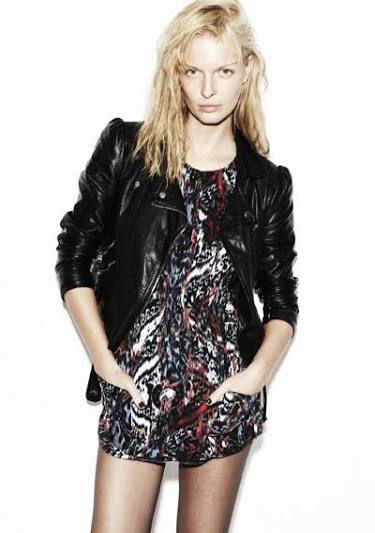
From the international fashion industry to British local government and the struggle against Vladimir Putin, Ksenia Maximova has led an unusual life. Now facing criminal proceedings in Russia and concerned for her personal safety, she has chosen to spend time in Ukraine. Matthew Parish, Editor-in-Chief of the Lviv Herald, spoke with her about Russian imperialism, the divisions within the Russian opposition, Britain's preparedness for confrontation with Moscow and the possibility of reconciliation between Russians and Ukrainians.
By Matthew Parish
Friday 6 November 2026
There is something distinctly paradoxical about Ksenia Maximova. Born in Russia, educated in Britain and for years a successful international fashion model, she is now a British Liberal Democrat councillor, a prominent opponent of Vladimir Putin and an activist working to support Ukraine. She has become a Russian political dissident whose opposition to the Russian state has, by her own account, made her feel more Russian than she ever did before.
In September 2026, the Russian authorities opened criminal proceedings against her, placed her on their wanted list and designated her a terrorist and extremist. She describes an extensive campaign of denunciation against her on Russian state television, accompanied by statements attributed to the Russian security services suggesting that her movements were being monitored. She is sufficiently concerned about her safety that she has been advised to spend time away from Britain, where members of her family live.
Yet Maximova is not someone who appears inclined towards self-pity. She is outspoken about the failures of the Russian opposition, critical of the continuing imperial mentality within Russian society and sceptical that the departure of Vladimir Putin would, by itself, produce any meaningful political transformation. She also speaks with admiration about Ukrainian resilience and with considerably less confidence about Britain's preparedness for the realities of modern warfare.
Our conversation took place while she was in Kyiv. It was an unusually candid discussion about political identity, the responsibilities of Russians who oppose their government and the difficulties of resisting an authoritarian state from abroad.
From fashion to political resistance
Matthew Parish: You have followed an extraordinary path from international fashion modelling to British politics and campaigning against Vladimir Putin. Looking back, what connects these apparently very different stages of your life? What has been your principal motivation?
Ksenia Maximova: I got into modelling almost by accident. It wasn't necessarily something I had planned to do with my life. Of course, ultimately it was my decision, but it was something I happened to find myself doing.
Politics and activism were very different. They were things I had thought about seriously and had always cared about. When the full-scale invasion of Ukraine began, I felt that doing nothing was simply no longer an option. That was when I founded the Russian Democratic Society in London.
Matthew Parish: You were born in Russia but grew up largely in Britain. You have now become a committed supporter of the Ukrainian cause. How did that develop?
Ksenia Maximova: I am Russian, although I suppose I am British by now as well. I grew up in the United Kingdom from the age of fourteen.
My relationship with Ukraine is actually quite recent. I had only visited for a couple of days as a child, and then I came here again at the beginning of 2025. It was love at first sight.
But when the full-scale invasion began in February 2022, I had absolutely no doubts about what the right thing to do was. We had been dreading the possibility of something like this happening for some time. Everyone was hopeful until the last moment that Putin would not be insane enough actually to do it. Unfortunately, we were wrong.
For me it was crystal clear that the invasion was completely wrong and that we had to do everything possible to help Ukraine and stop Putin.
Matthew Parish: You have spoken about the profound impression made upon you by Russia's invasion of Georgia in 2008, particularly an encounter with an injured Georgian friend. Could you describe that experience and explain how it changed your understanding of Russia?
Ksenia Maximova: It was 2008, and I knew there was a conflict taking place involving Georgia and Russia. I had a young Georgian friend at university who went home for the summer holidays.
When everyone returned, he wasn't there. At first I assumed perhaps he had decided not to return to university at all. I was surprised because he hadn't even said goodbye.
Then I discovered that he had been conscripted into the Georgian army and sent to fight against Russian troops. He had been wounded. He returned the following semester with his injuries.
I think that was the first time I saw with my own eyes what my country could do to another human being. It was terrifying.
Matthew Parish: You subsequently participated in the Russian opposition demonstrations of 2011 and 2012. Did you genuinely believe at that time that Russia might become a functioning democracy?
Ksenia Maximova: Yes, I think we were hopeful that things might change. But there was also something quite frightening about those demonstrations.
I remember being pushed and squeezed out of a crowd by OMON, the Russian riot police. The officers wore helmets that concealed their faces. You couldn't see the people behind them. It was almost as though they had been deprived of their individual personalities, which perhaps made it easier for them to behave that way towards us.
That was the first time I really understood how physical the authorities could become if they decided to use force.
So there were two feelings at the same time. On the one hand, perhaps things could change. On the other, we were being permitted to speak only because the authorities had decided to let us speak. Ultimately, the strength was on their side.
I began to realise quite quickly that it probably wasn't going to work. Our opposition was also very weak, and the infighting started almost immediately.
Matthew Parish: You have lived in Russia, Britain and Italy, and now spend considerable time in Ukraine. Do you primarily think of yourself as Russian, British or European?
Ksenia Maximova: I don't think I really identify myself as any one of those things. I've been trying to work that out throughout my life, without ever quite succeeding.
I left Russia quite young. Whenever I went back, Russians would tell me that they could see I had grown up in the West, that I was different. People would even make fun of me for smiling too much, because Russians tend to be rather grumpy!
In Britain, particularly London, everyone is so international that people don't ask where you're from very much. It can almost seem rude to ask. I certainly felt at home in Britain.
Then I spent a significant part of my life in Italy. I grew up around Italians from the age of sixteen, and I think a lot of my personality comes from them. I wave my arms around and speak quite loudly!
But the really interesting thing is that this war has made me more Russian.
Because of all the anti-government campaigning I have been doing, I have suddenly become identified as the Russian. In London, that is now what I am. It has almost been decided for me, whether I wanted that identity or not.
Ukraine, imperialism and collective responsibility
Matthew Parish: You have now spent considerable time in Ukraine. What have your experiences taught you about Ukrainian society and its extraordinary resilience?
Ksenia Maximova: I think Ukrainian society is incredibly resilient and very closely connected. Obviously, Ukraine has its own problems, but I genuinely doubt that most European countries could respond in the same way if something like this happened to them now.
I don't think they could pull together so quickly or stand up to aggression so strongly.
When I return to Britain, I sometimes look around and wonder what on earth people would do if something similar happened there. I simply don't see the same readiness.
I really admire Ukrainians for what they have achieved. I am grateful that I can be here with them and learn from them. That is one of the reasons I want to be here.
Matthew Parish: I recognise that feeling very well. I was born in Britain myself, but I have lived much of my adult life elsewhere and have now spent three and a half years living in Ukraine. Every time I return to Britain, I have much the same reaction: people simply don't seem to understand what is happening here or what it might mean for them.
There is another question that I think is particularly important. Many Ukrainians argue that Russian imperialism is a much deeper historical phenomenon than Vladimir Putin himself, and that Russian society bears a degree of collective responsibility for the war. To what extent do you agree?
Ksenia Maximova: I definitely agree that imperialism is a longstanding feature of Russia. It is embedded in the mentality.
There is this idea that Russia used to be an empire, then it was a union, and that somehow it should be uniting everyone. Uniting, uniting, uniting, as though everybody else actually needs Russia to unite them.
You can hear elements of that thinking even among people who dislike the present government.
I am not entirely sure how you stop it. I think it requires a complete change in the way people are educated and how they understand history. It would probably take a couple of generations.
Britain provides an interesting comparison. When I was at school in the United Kingdom, I was taught things about British history that were intended to challenge an imperialistic mentality. I think Britain has learned a great deal from its historical mistakes.
Russia is nowhere near that point.
As for collective responsibility, I can only answer for myself. I do feel responsible. But I cannot answer for everybody else, and I don't think it is my place to do so.
Matthew Parish: How do Ukrainians respond when they discover that you were born in Russia? Have you encountered hostility or suspicion, and what does that suggest about the possibility of reconciliation?
Ksenia Maximova: It really depends. There is an interesting distinction between Ukrainians living abroad and Ukrainians who are actually here in Ukraine.
I have had more difficulties with Ukrainians outside Ukraine than with those living here. That surprised me enormously. I expected the opposite.
I assumed that people who were facing Russian aggression every day would be the most hostile towards Russians. But my experience has been quite different.
Perhaps Ukrainians who have left the country have a different battle to fight. Those who remain here are dealing with the practical realities of survival. They have things to do and problems to solve, and those things go far beyond being angry with someone simply because they happen to be Russian.
I could never have understood that without actually coming here myself.
Matthew Parish: That corresponds with something I have observed in my own work on civil wars and international conflicts. In Bosnia, where I first became involved in conflict-related work, I encountered a similar phenomenon. People living through the daily realities of war can sometimes be more pragmatic in their personal relationships than those who have left and developed their political identities abroad.
People who remain in a war zone have to get through each day. They cannot necessarily afford to organise their entire lives around hatred, even when they have suffered terribly.
But let me ask about the political settlement. What would constitute a just conclusion to this war? Should it include the restoration of Ukraine's internationally recognised borders, including Crimea, together with reparations and accountability for war crimes?
Ksenia Maximova: Well, yes, obviously. But the problem is how feasible all of that really is under the present circumstances.
Personally, I don't think Russia should remain in its current form.
But I am not a great enthusiast for endless discussions about hypothetical scenarios and what ought to happen in an ideal world. I am much more interested in what we can actually do right now.
That means understanding what is acceptable to the important international actors. What matters is not simply what I think should happen, but what is acceptable to the United States, for example, under the present circumstances.
I am constantly trying to understand where the different actors stand and whether they are still on the right side of these questions.
Matthew Parish: Even if Putin disappeared tomorrow, would you trust a successor Russian government to respect Ukraine's independence? What would have to change before Russia could be regarded as a responsible European state?
Ksenia Maximova: I think that would take decades.
We would need some form of temporary transitional government. I certainly don't think that simply replacing Putin with whoever happens to succeed him would produce anything acceptable under present circumstances.
The Russian opposition in exile
Matthew Parish: You founded the Russian Democratic Society following the full-scale invasion. What were you originally trying to achieve, and what do you regard as its principal accomplishments?
Ksenia Maximova: The organisation has changed quite a lot over time.
Initially, we were mainly organising demonstrations and raising money for Ukraine. In terms of practical assistance, I think our first two years were probably the most productive, because that was when people were donating the most.
We managed to purchase medical equipment and generators. We are still raising money for generators, although fundraising has become much slower.
We have also tried to help Russian asylum seekers and people who face political persecution if they are returned to Russia.
One of our biggest accomplishments was helping establish an All-Party Parliamentary Group concerned with Russia and democracy in the British Parliament. That was certainly an important milestone for me personally.
But I also think the community itself matters. We have created something that continues to exist, and people are still joining and wanting to participate.
Matthew Parish: The Russian opposition abroad is frequently criticised for personal rivalries, competing organisations and an inability to agree upon a common political programme. How fair is that criticism?
Ksenia Maximova: I think it is a very fair criticism.
The infighting has consumed so much energy that these organisations have, to a considerable extent, immobilised themselves. It is incredibly frustrating.
One of the biggest problems is that some of the most prominent opposition figures present themselves as though they represent all anti-war Russians. In reality, that is simply not true.
I think if you asked ordinary anti-war Russians whether these organisations genuinely represented them, many would say that they did not.
These groups often have much greater access to finance and publicity than smaller organisations. As a result, they can overshadow the practical work being carried out by volunteers on the ground, frequently without any payment at all.
It is a very frustrating situation for those of us who are actually trying to achieve something.
Matthew Parish: Alexei Navalny became an international symbol of resistance to Putin. But his death also exposed the absence of an obvious leader capable of uniting the Russian democratic opposition. Is there anyone who can provide that leadership today?
Ksenia Maximova: Not really, at the moment.
There were considerable hopes surrounding some of the political prisoners who were subsequently released, but those expectations haven't really produced anything.
I suppose it takes time for new political leaders to emerge. At present, I don't think there is anyone who can play that role.
But there will be someone eventually. These situations do not last forever.
From Ealing Council to the Kremlin's wanted list
Matthew Parish: You were elected as a Liberal Democrat councillor in Ealing in May 2026. Why did you choose the Liberal Democrats, and what differences have you discovered between British democratic politics and Russian political culture?
Ksenia Maximova: I joined the Liberal Democrats because of the assistance they gave us during our campaign against the legitimisation of Putin's presidential election in 2024.
They volunteered to help us, and they were effective. They supported an emergency motion on the issue, and I saw a political party that was willing to take initiative and act.
That was unusual and impressive. I was already in contact with them, and joining seemed a natural progression. Since then, my experience with the party has been extremely positive.
There is also something very different about the political culture.
I recently showed Maxim Katz, who is a well-known Russian political commentator and former Moscow municipal deputy, around the council building in Ealing.
He started telling me about his experiences in Moscow, and I realised how different they had been. He had spent much of his time fighting against an aggressive ruling party that was determined to obstruct everything the opposition attempted to do.
Of course, in Ealing we have political disagreements with Labour, which controls the council. But it is nothing like trying to operate politically against Putin's party.
Another thing I have noticed is that people in British politics are generally willing to help one another. They are not constantly trying to destroy each other.
In Russian opposition politics, that has unfortunately not always been my experience.
Matthew Parish: You have spoken about the possibility of entering the British Parliament. What would you hope to achieve as a Member of Parliament that you cannot presently achieve as a councillor or civil society activist?
Ksenia Maximova: This may sound rather strange, but staying alive would be a plus!
I once made that remark in an interview with a Polish newspaper, and it ended up becoming the main explanation given for why I wanted to become an MP. That was certainly not what I intended.
But there is a serious issue of personal safety behind the remark.
Matthew Parish: Can I interrupt you there? Are you genuinely afraid for your life?
Ksenia Maximova: Yes. That is one of the reasons I am in Kyiv now.
Matthew Parish: I have written extensively about Russian intelligence and the activities of the Russian security services. What precisely is it that frightens you?
Ksenia Maximova: When the Russian authorities declared me a terrorist and extremist, there was an enormous campaign against me on Russian state television.
Almost every major state television channel seemed to broadcast a lengthy programme about me, often during prime time. It was an extraordinary amount of attention.
Many of those programmes included footage of a backlit man whose voice had been altered. There was an FSB logo, and the presentation suggested that he was speaking on behalf of the Russian security services.
He was saying that they were tracking our every move and everything we did.
Of course, he was speaking about us collectively, but these were programmes specifically devoted to me. There are not that many of us involved in this kind of activism in London.
The sheer scale of the publicity worried me. There was so much television coverage and so much in the newspapers that I began to fear they might be preparing to make an example of me.
Matthew Parish: So your concern is that you have been singled out for attention by elements of the Russian security apparatus?
Ksenia Maximova: Yes, although I wouldn't suggest that the entire Russian security apparatus is concerned with me. They have much bigger things to deal with.
But there is clearly an interest in what I am doing.
When somebody appears on television, purporting to represent the security services, and says that your movements are being watched in London, it changes how you feel about being there.
I became uncomfortable even being around my home. I would rather they knew that I wasn't there, particularly because of my concerns for my family.
Matthew Parish: Is that why you decided to spend time in Ukraine?
Ksenia Maximova: It isn't the only reason. I genuinely want to be in Ukraine, and I enjoy being here.
But yes, I was also advised that it would probably be sensible to spend some time away from Britain.
Matthew Parish: When the Russian authorities opened criminal proceedings against you in September, were you expecting something of that kind?
Ksenia Maximova: I was surprised.
I knew that the FSB was going to start tightening the screws on Russians abroad. I expected the authorities to become more aggressive towards people involved in opposition activities outside Russia.
What surprised me was how quickly it happened and that I should become such a prominent target.
There are also concerns about relatives who remain in Russia, and that creates a very difficult personal situation. It means that my political activities now affect my family life in ways I never anticipated.
Matthew Parish: How do you reconcile those concerns with your political convictions? I don't want you to disclose anything that could compromise anyone's security, but it must be extraordinarily difficult.
Ksenia Maximova: It is very difficult.
There isn't really very much I can say about it. We do what we can, and ultimately we just have to hope for the best.
Britain, sanctions and the threat from Russia
Matthew Parish: What is your assessment of British policy towards Ukraine? Where has Britain demonstrated leadership, and where has its response been inadequate?
Ksenia Maximova: I think a lot of the work on sanctions is quite disconnected.
Ukrainians provide considerable amounts of information to the European Union and the British authorities, but sometimes it is incredibly difficult to obtain any meaningful response.
In terms of military assistance, I think Britain has done a reasonably good job.
But I am concerned about how sustainable that assistance is, particularly when Britain has so many gaps in its own defence capabilities.
It is difficult to imagine how Britain can continue to provide substantial military support indefinitely without addressing those deficiencies.
Britain really needs to prepare itself.
Matthew Parish: You mean militarily?
Ksenia Maximova: Yes, absolutely.
Matthew Parish: You have also been involved in research concerning companies providing services to Russia's oil industry. Where do you see the greatest weaknesses in the Western sanctions regime?
Ksenia Maximova: A great deal depends upon political decisions.
When I was in the United States, I spoke with people who appeared to have a good understanding of the discussions taking place around energy policy. They suggested that there were conversations about the possibility of certain oil and gas companies resuming operations in Russia.
That is particularly worrying.
There are also enormous inconsistencies in sanctions enforcement throughout Europe. If you look at production, the exchange of goods and industrial materials, there are problems involving countries such as Germany and Italy as well.
The whole system is full of holes.
I think part of the problem is that the European economy is fragile, and governments are constantly trying to choose what they regard as the lesser evil. Unfortunately, those decisions sometimes become profoundly unethical.
As for measures that have actually affected Russia's ability to continue the war, I think Ukrainian attacks on Russian oil refineries have been effective. I do wonder whether they could have been carried out more systematically, but the underlying economic effect has been significant.
Matthew Parish: How serious do you think the threat of Russian espionage, sabotage and political interference is within Britain? Do British politicians and the general public adequately understand the problem?
Ksenia Maximova: There is still a dangerous degree of complacency.
Things have improved somewhat over the past year. I remember being told, quite seriously, that there were no Russian operatives active on the ground in Britain, even though it seemed obvious to me that the threat existed.
That was extremely concerning.
I think the threat is now more widely acknowledged, but the problem has become so complicated that it is difficult to establish who is involved in what and which people represent genuine risks.
London contains so many members of the international elite and their associated networks that it can be very difficult to understand all the relationships.
As for the British public, I think many people remain unaware of the details. Others are becoming frightened.
And Britain is not dealing exclusively with Russia. There are also threats and pressures involving Iran, China and other international actors. Even relations with the United States have become more complicated.
It is a very difficult environment to understand, let alone manage.
Can Russia ever return to Europe?
Matthew Parish: Do you believe Russia can ultimately be reconciled with Europe, or has the invasion of Ukraine ended that possibility for the foreseeable future?
Ksenia Maximova: For the foreseeable future, I think reconciliation is impossible.
It would take a very, very long time. Decades at best, perhaps considerably longer.
The problem is that Russia has behaved this way repeatedly. This is not the first time it has attacked its neighbours or threatened European security.
Europe now understands the kind of neighbour it has. Even if several generations pass, that awareness will remain.
I don't think Europe will simply forget what has happened or return to the relationship it once hoped to have with Russia.
Matthew Parish: Finally, I would like to ask you something directly on behalf of our Ukrainian readers.
Many Ukrainians have lost their homes, their livelihoods and people they love because of Russia's invasion. Some understandably find it difficult to believe that Russians who oppose the war can genuinely be their allies.
What would you like to say to them?
Ksenia Maximova: I don't know whether there is anything I can say that would be sufficient.
Obviously, to people who have lost their homes and suffered terribly, I would say that I am very, very sorry for what has happened.
But my whole point is that we should act.
If Ukrainians want to act together with us, then let's act together. If they are exhausted and feel they cannot do any more, perhaps we can help carry some of that burden.
Russians have an understanding of Russia that can be useful in confronting the Russian state. We know the country, its people and how it works.
In that sense, I believe Russians who oppose this war and Ukrainians can be natural allies.
There is a great deal we can do together.
Matthew Parish: Ksenia, thank you for what has been a thoughtful and unusually candid conversation. You have a remarkable background, and I think our readers will appreciate both your willingness to confront the problems within Russian society and your practical commitment to helping Ukraine. Thank you for your work, and God bless you.
Ksenia Maximova: Thank you, Matthew. Thank you for reaching out.
A Russian voice against Russian imperialism
There is an important distinction between opposing Vladimir Putin and opposing the political culture that made Vladimir Putin possible. One can imagine a Russia without Putin quite easily, at least as an abstract proposition. Imagining a Russia that has abandoned its imperial ambitions, accepted the sovereignty of its neighbours and reconciled itself to the consequences of its aggression is a much more difficult undertaking.
What makes Ksenia Maximova interesting is that she appears to recognise the distinction. She does not offer the comforting proposition that everything will become normal once the present Russian president departs from office. Nor does she pretend that the Russian opposition abroad is an effective, united political movement waiting patiently for its historical opportunity. Her criticism of the opposition's internal rivalries, self-appointed representatives and unequal access to resources is unusually forthright for someone who is herself an established figure within that community.
There is also something revealing about her account of national identity. Having spent most of her life outside Russia, Maximova never felt entirely Russian until she began publicly opposing the Russian government. Her political identity has been imposed upon her, in part by the necessity of explaining that a person can be Russian without accepting the imperial ambitions of the Russian state. The irony is considerable: in rejecting the Kremlin, she has found herself obliged to confront her Russian origins more directly than at any earlier point in her life.
Nevertheless, the most significant part of our conversation may be her insistence that sympathy is insufficient. Ukrainians have heard plenty of expressions of regret from people who oppose the war but remain powerless, or unwilling, to do anything about it. Maximova's response is to emphasise practical cooperation: fundraising, political advocacy, humanitarian assistance and the application of knowledge about Russia to the task of resisting its aggression.
Whether these activities can eventually contribute to a larger political transformation remains uncertain. Maximova herself recognises that Russia may require generations of change before it can be reconciled with Europe, and that a simple change of leadership would provide no guarantee of peace. Meanwhile, she is living with the personal consequences of challenging the Kremlin, separated from aspects of her ordinary family life and concerned about the reach of Russian intelligence beyond Russia's borders.
Ukraine has learned through bitter experience that declarations of solidarity are worth considerably less than actions. Maximova's most important contribution may therefore lie not in being a Russian dissident, a former international model or an aspiring British parliamentarian, but in her willingness to acknowledge an uncomfortable truth: those Russians who genuinely oppose the war have an obligation to demonstrate that opposition through what they do, rather than merely through what they say.
For the moment, she is doing so from Ukraine, a country whose determination to resist Russian aggression she openly admires. Her final message to Ukrainians was not a demand for forgiveness or even an appeal for reconciliation. It was a much more practical proposition: those who wish to oppose the Kremlin should work together, and those who still have the energy to act should help those who have been exhausted by war.
In a conflict characterised by too many grand political declarations and too few satisfactory answers, that is perhaps a useful place to begin.


