


Steel, Silicon and Spirit: Ukraine’s Homegrown Defence Industry Rises
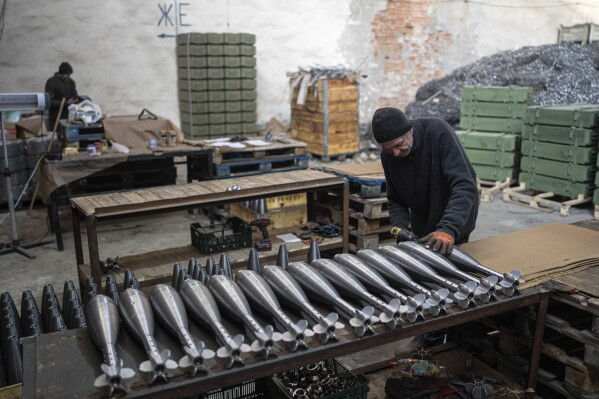
When Russia launched her full-scale invasion in February 2022, Ukraine’s defence sector was largely reliant on Western arms, ageing Soviet-era stockpiles, and urgent improvisation. Three years later, Ukraine’s battlefield resilience owes as much to her own industrial ingenuity as to foreign supply.
A quiet revolution is under way in workshops from Lviv to Dnipro: the rebirth of a national defence industry under fire. Ukraine is no longer merely a consumer of NATO support. She is becoming a net producer of warfighting capability—harnessing her engineers, coders, and entrepreneurs to reforge a modern military-industrial base from the ruins of war.
We now survey the rise of Ukraine’s homegrown defence sector, tracing its roots in the post-Soviet period, analysing its rapid adaptation under wartime pressure, and assessing its future prospects as a European arsenal with global strategic relevance.
From Soviet Inheritance to National Innovation
At independence in 1991, Ukraine inherited one of the most formidable defence industrial complexes in the post-Soviet space. The country hosted thousands of design bureaux, manufacturing plants and research institutes. Among these were:
Antonov: builder of heavy cargo aircraft including the AN-124 and AN-225.
Malyshev Plant (Kharkiv): specialist in armoured vehicles and tank production.
Yuzhnoye/Yuzhmash (Dnipro): missile and rocket design legacy from the USSR’s ICBM programmes.
Motor Sich (Zaporizhzhia): manufacturer of jet and helicopter engines.
Ukroboronprom: the state-owned umbrella corporation for over 130 enterprises.
But this industrial potential was squandered by years of corruption, underinvestment and uncertain strategic direction. Many firms continued to export to Russia well into the 2010s. The 2014 annexation of Crimea and the Donbas war began the process of reorientation—but full-scale reform came only with the 2022 invasion.
War as Industrial Catalyst
Necessity proved the mother of transformation. The full-scale war forced Ukraine’s defence sector to do three things quickly:
Localise production, to reduce dependency on foreign supply chains and adapt rapidly to battlefield needs.
Decentralise output, dispersing manufacturing across secure or underground locations to mitigate missile attacks.
Integrate private sector and civilian innovation, drawing on Ukraine’s formidable tech community and its wartime patriotism.
By 2024, hundreds of small and medium-sized enterprises (SMEs) were producing drones, munitions, electronic warfare equipment, software platforms and body armour. The defence sector ceased to be a state-only enterprise. It became a nationwide mobilisation of engineering talent.
Pillars of the New Defence Sector
Ukraine’s revived defence sector stands on three foundations: steel, silicon and spirit.
1. Steel: Legacy Strengths Reforged
Ukraine retains substantial industrial capacity for traditional war production:
Armoured vehicles: Ukraine has revived its capacity to repair, refurbish and upgrade Soviet T-64 and T-72 tanks, and to produce indigenous variants of IFVs and APCs.
Artillery systems: While heavy-calibre production is still limited, Ukraine has developed domestic 122mm and 152mm shell manufacturing lines, with some success at scaling up.
Small arms and munitions: Several private firms now produce 5.45mm and 7.62mm ammunition, grenades, mortars, and anti-personnel mines.
Vehicle maintenance hubs: Logistics centres in western and central Ukraine service Western-supplied vehicles under NATO contracts.
Although not yet at NATO production scale, Ukraine is gradually building an industrial core to replace wear-and-tear losses internally.
2. Silicon: The Drone and Digital Revolution
Perhaps Ukraine’s greatest leap has been in electronic warfare, autonomous systems, and drone innovation.
FPV drones: Thousands of racing drones, costing under $500, are turned into precision-guided munitions via 3D-printed mounts and open-source software.
Reconnaissance UAVs: Platforms like Leleka-100, Fury and SHARK provide real-time targeting and ISR (intelligence, surveillance, reconnaissance).
Sea drones: Maritime kamikaze drones, such as those used in the strikes on the Crimean Bridge and Black Sea Fleet, are developed by private-public collaborations.
AI and software: Ukraine’s IT community provides facial recognition, geolocation, strike coordination, and even mobile apps for artillery command (e.g. GIS Arta).
Electronic warfare: Ukrainian developers are producing counter-drone jammers, signal disruption systems, and portable EW backpacks.
The decentralised nature of this sector allows rapid prototyping and field testing—often with feedback loops measured in days, not months.
3. Spirit: A Culture of Innovation Under Fire
The intangible core of Ukraine’s defence revival is national spirit. A powerful sense of mission animates engineers, scientists, and students who might otherwise have pursued peacetime tech careers.
Hackers become drone developers.
Engineers from the automotive industry now build loitering munitions.
Refugee returnees found micro-factories.
Civilians crowdfund startups, test prototypes on the front line, and share battlefield lessons in open forums.
This convergence of civil society and war production is unprecedented in modern Europe. It is agile, improvisational—and effective.
International Partnerships and the Path to NATO Standards
Since 2023, Ukraine has signed joint production agreements with US, British, German and Polish defence firms. This includes:
Munition co-production with Rheinmetall (Germany) and BAE Systems (United Kingdom).
Drone collaboration with British and Israeli manufacturers.
Training and maintenance agreements for artillery systems and air defence platforms.
Such partnerships serve two purposes: ensuring sustainability of wartime supply, and positioning Ukraine as a future NATO-compatible defence supplier.
The Ministry of Strategic Industries, newly created in 2024, now coordinates domestic procurement, foreign investment and defence export licensing. Despite some early corruption scandals, transparency reforms are improving.
Challenges Ahead
Ukraine’s homegrown defence industry, for all its dynamism, faces serious constraints:
Security: missile strikes regularly target production sites, forcing dispersal and secrecy.
Financing: many firms rely on donations or unstable government contracts.
Bureaucracy: post-Soviet procurement culture remains resistant to innovation.
Export limitations: until the war ends, most capacity is absorbed by domestic needs.
Manpower: engineers and technicians are increasingly being mobilised for frontline service.
Without sustained reform, integration, and protection, the sector risks stagnation even as it succeeds on the battlefield.
Ukraine as Europe’s Arsenal?
Looking beyond the war, Ukraine has the potential to become a regional arsenal—a supplier of cost-effective, combat-tested systems for NATO’s eastern flank and the Global South.
Advantages include:
Combat validation: Ukrainian systems have been proven under modern warfare conditions.
Cost competitiveness: local production is cheaper than Western equivalents.
Innovation culture: start-ups can iterate faster than legacy manufacturers.
In time, a demobilised but experienced engineering class could power a new defence technology economy that fuels Ukraine’s reconstruction.
Forged in Fire, Facing Forward
Ukraine’s defence industry is not a miracle. It is the result of desperation, talent, sacrifice, and necessity. Yet it may prove to be one of the country’s most enduring legacies of this war.
In steel, she rebuilds her muscle.
In silicon, she sharpens her brain.
In spirit, she reminds the world that sovereignty must be manufactured, not begged for.
The West must support this industry—not merely as wartime logistics, but as a strategic partnership. A strong Ukrainian arsenal is not just Ukraine’s shield. It is Europe’s future insurance policy.


