


Reclaiming the American Republic: Congress, the Constitution and the Crisis of Presidential Power
By Anonymous with Matthew Parish
Saturday 7 November 2026
The United States is facing a constitutional crisis that cannot be resolved merely by electing a different president or restoring a more moderate tone to American political life. Donald Trump and those around him have, in our judgment, inflicted profound damage upon the constitutional order, the Western Alliance and the system of international relations commonly described as the Pax Americana. Repairing that damage will require extraordinary political determination and a fundamental reconsideration of the relationship between the three branches of the federal government.
I believe strongly in restoring the vital center of American politics. There is an urgent need for responsible Democrats and Republicans to rediscover the tradition of political compromise, institutional restraint and mutual respect that made American constitutional government possible for so long. But moderation must not become an excuse for inaction. Before the political center can be restored, the constitutional damage inflicted by the Trump administration must be addressed. The first responsibility of the newly elected Democratic Congress should be to undertake that task.
For Americans of my generation, who lived through Vietnam and Watergate, these questions have a particular resonance. We learned that the American presidency is capable of grave abuses of power, that political authority must be subjected to constitutional limitations and that loyalty to the Republic sometimes requires opposition to those who temporarily govern it. We also learned that constitutional crises are not resolved by polite declarations of principle. They require political courage, institutional action and an understanding of how the Constitution distributes power.
The framers of the Constitution did not intend to establish an elected monarchy. Nor did they intend to create a Supreme Court exercising virtually unlimited authority over the decisions of the elected branches of government. They established a system in which power would be divided, checked and regulated, and in which the elected legislature would occupy a central position in determining the laws governing the Republic. In my view, that constitutional balance has been progressively distorted, and the present administration and Supreme Court have taken those distortions to an extreme.
Impeachment is a political remedy
The first task must be the impeachment and removal of Donald Trump and, if the evidence establishes his complicity, Vice President J.D. Vance. I believe there are ample grounds for Congress to pursue impeachment of Trump based upon allegations of treason, abuse of power and corruption, and to investigate Vance's responsibility for the same constitutional offenses. These matters should be examined through the constitutional impeachment process, with the evidence placed before Congress and the American people.
It is essential to understand that impeachment is a political, not a criminal, process. The Constitution provides for the removal of a president, vice president or other civil officer for treason, bribery or other high crimes and misdemeanors. The purpose is not to impose criminal punishment, but to protect the Republic from officials whose conduct has rendered their continuation in office incompatible with the public trust. Although treason has a specific and narrow constitutional meaning, impeachable misconduct extends well beyond offenses punishable under the ordinary criminal law.
The framers deliberately entrusted impeachment to Congress rather than the federal judiciary. The House of Representatives determines whether to impeach, and the Senate determines whether the accused official should be convicted and removed. Conviction requires the concurrence of two-thirds of the senators present, meaning 67 votes if all 100 senators participate. This extraordinary threshold reflects the framers' intention that removal should require a political consensus extending well beyond ordinary partisan majorities.
The difficulty is that the modern American political system makes such a consensus almost impossible to achieve. Republican senators have become acutely conscious of the power of the MAGA movement over their political careers. Even those who privately believe that Trump has committed grave abuses may fear that voting publicly for his removal would end their prospects of reelection, expose them to political intimidation or provoke retaliation against themselves and their families.
This is why I believe that the Senate should be permitted to vote by secret ballot in impeachment proceedings. The purpose of secrecy would not be to conceal wrongdoing or evade constitutional responsibility, but to enable senators to exercise their independent judgment free from the extraordinary pressures imposed by contemporary partisan politics. If impeachment is intended to permit the removal of a president who has abused his office, its procedures should not make removal practically impossible because senators fear the political consequences of their votes.
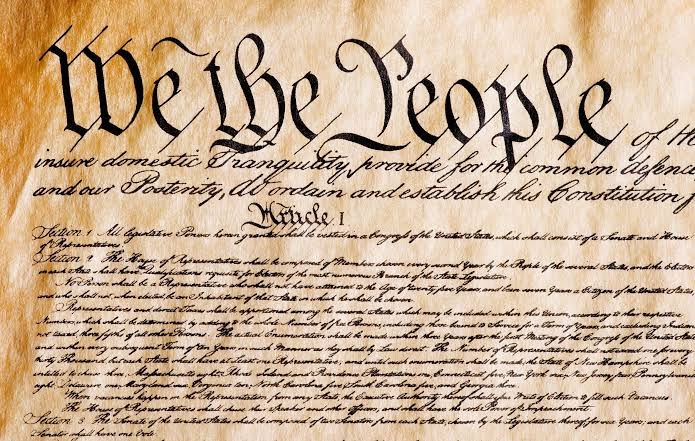
Such a proposal would require substantial procedural reform. Existing Senate impeachment rules provide for a public roll-call vote, while Article I also gives one-fifth of the members present the right to demand that votes be entered in the congressional Journal. The Constitution nevertheless allows each house to determine its rules and recognizes that portions of its proceedings may require secrecy. The interaction of those provisions deserves serious examination. If a genuinely secret impeachment vote cannot be achieved without constitutional amendment, then that possibility should be debated rather than dismissed.
The essential point is that the constitutional power of impeachment must remain meaningful. If a president can retain office simply by intimidating legislators into supporting him publicly, regardless of their private convictions, the impeachment power risks becoming an empty formality. The extraordinary consensus contemplated by the framers should be a consensus of independent political judgment, not one manufactured through fear.
Should Trump and Vance both be removed, the country would require a lawful and broadly acceptable transition. The House should seek bipartisan agreement upon a centrist Speaker capable of providing stable leadership if the statutory presidential succession arrangements become applicable. Such an appointment would not itself constitute the election of a president, but it could provide a constitutional route toward temporary national leadership in the extraordinary circumstances created by simultaneous vacancies in the presidency and vice presidency.
The Supreme Court has accumulated powers the Constitution does not expressly grant
The second task is even more fundamental. Congress must reconsider the extraordinary authority that the Supreme Court has accumulated over the constitutional and political life of the United States.
The Supreme Court has come to occupy a position in American government that is often treated as though it were ordained in every detail by the Constitution itself. Much of that position, however, is the product of judicial decisions, historical practice and institutional tradition. The doctrine of judicial review, developed most famously in Marbury v. Madison in 1803, has become a central feature of American constitutional law, although the Constitution does not expressly state that the Supreme Court possesses an unlimited power to invalidate legislation enacted by Congress.
There are compelling reasons for an independent judiciary to ensure that the elected branches respect the Constitution. The protection of individual rights and the prevention of unconstitutional government action are essential features of the American system. But it does not follow that every assertion of judicial supremacy is constitutionally justified, or that the Supreme Court must have the final word upon every matter of national policy regardless of the jurisdiction Congress has granted it.
Article III of the Constitution deserves to be read carefully. It establishes one Supreme Court and provides for such inferior federal courts as Congress may establish. It defines the categories of cases and controversies to which the judicial power of the United States extends. Most importantly, it distinguishes between the Supreme Court's original jurisdiction and its appellate jurisdiction.
The original jurisdiction of the Supreme Court encompasses cases affecting ambassadors, other public ministers and consuls, and cases in which a state is a party. That jurisdiction is conferred directly by the Constitution. In other categories of federal cases, however, the Supreme Court exercises appellate jurisdiction subject to the express constitutional authority of Congress.
Article III provides that this appellate jurisdiction exists:
"In all the other Cases before mentioned, the Supreme Court shall have appellate Jurisdiction, both as to Law and Fact, with such Exceptions, and under such Regulations as the Congress shall make."
Those final words are of enormous constitutional significance. They do not say that the Supreme Court may determine the extent of its own appellate jurisdiction without reference to Congress. They expressly contemplate that Congress may make exceptions and regulations governing that jurisdiction.
The constitutional authority of Congress in this field is not merely theoretical. In Ex parte McCardle in 1869, the Supreme Court recognized congressional power to withdraw a particular avenue of appellate jurisdiction. The exact limits of that authority remain disputed, and no serious constitutional argument should pretend that Congress can abolish every judicial safeguard simply by passing an ordinary statute. Nevertheless, the existence of limitations upon congressional power does not justify ignoring the powers the Constitution expressly confers.
In my view, the modern Supreme Court has exercised its authority in ways that have progressively diminished the legislative branch and enlarged the executive. Its willingness to invalidate legislation enacted through the democratic process, coupled with its increasing protection of presidential discretion, has contributed to an imbalance that the framers would have recognized as dangerous.
The 2024 decision in Trump v. United States, recognizing broad immunity for presidential official acts, illustrates the problem. The Court elevated the protection of executive authority in a manner that, in my judgment, threatens the fundamental principle that government officials remain answerable for abuses of public power. Particularly troubling is the possibility that actions undertaken for corrupt, vindictive or otherwise improper personal motives may receive constitutional protection because of their formal classification as official presidential conduct.
An executive who enjoys expansive powers and extensive immunity, while the elected legislature finds its laws increasingly vulnerable to judicial invalidation, is not the constitutional arrangement I believe the framers intended. It risks producing a powerful presidency protected by an equally powerful judiciary, with Congress reduced to an institution whose decisions may be frustrated by both.
Congress must reclaim its constitutional authority
I therefore favor a comprehensive legislative program to restore the constitutional balance between Congress, the presidency and the Supreme Court.
This should include serious consideration of increasing the number of Supreme Court justices from nine to thirteen. The Constitution does not specify the number of justices, and Congress has altered the Court's size on several occasions in American history. A substantial expansion would offer an opportunity to change the composition of a Court whose present constitutional philosophy has, in my view, become dangerously deferential to executive authority.
There should be no pretense that such a measure would be politically neutral. It would be an exercise of constitutional power intended to correct what I regard as a profound institutional imbalance. That is precisely why its justification should be stated openly and debated in Congress, rather than obscured by euphemisms about administrative reform.
More importantly, Congress should make deliberate use of the authority granted to it under Article III to regulate the appellate jurisdiction of the Supreme Court. It should examine the categories of cases in which federal statutes may be challenged, the mechanisms through which appellate review is obtained and the extent to which legislation can establish appropriate boundaries for judicial intervention in the decisions of the elected branches.
The objective should not be to abolish constitutional rights or place Congress beyond the Constitution. Rather, it should be to prevent the Supreme Court from treating its own accumulated authority as though that authority were immune from the constitutional powers expressly reserved to Congress. Judicial independence is essential, but judicial independence is not the same as judicial supremacy over every political and legislative question.
Congress must also reconsider the scope of executive power under Article II. The president participates in the legislative process through the constitutional requirements of presentment, approval and veto, but legislative power is vested in Congress. The president does not possess an independent authority to rewrite statutes, disregard appropriations or transform personal political preferences into law. The Court's constitutional interpretations should not be permitted to erase this distinction.
The larger issue is democratic accountability. Federal legislation ordinarily requires the concurrence of the House and Senate and either presidential approval or the constitutionally prescribed means of overriding a veto. The resulting statutes embody decisions made through an elaborate representative process. It is legitimate for courts to prevent those statutes from violating the Constitution, but the judiciary should not assume a general power to substitute its policy preferences for the political judgments of the elected branches.
The founders did not design the judiciary to become an unelected legislature. Congress should use its lawful powers to ensure that it does not function as one.
Accountability for corruption and foreign influence
Constitutional reconstruction must be accompanied by a rigorous investigation into the conduct of the Trump administration. This should include an independent counterintelligence examination of Trump's relationships with Russia, the possibility of foreign influence over American decisions and any improper relationships involving members of his administration or associated individuals.
These matters should be investigated without artificial limitations imposed by partisan considerations. The purpose should be to establish the facts, identify any compromises of national security and determine whether public power has been exercised in the interests of foreign governments or private individuals rather than the American people. Allegations are not themselves proof, but allegations involving matters of such consequence require a serious and independent examination.
Where evidence establishes federal criminal offenses, appropriate prosecutions should follow. Impeachment and criminal prosecution are distinct constitutional processes, and the political nature of impeachment does not eliminate personal criminal responsibility where existing law has been violated. There should be no special immunity from ordinary criminal accountability simply because an individual has occupied the presidency or held another high federal office.
Congress should also review the federal criminal statutes to identify weaknesses that permitted abuses of executive authority or corruption to escape effective legal consequences. Prospective legislation should clarify public integrity obligations, strengthen safeguards against conflicts of interest and ensure that officials cannot exploit ambiguities in existing law to exercise powers for improper personal purposes.
Such legislation must be constitutionally sound and generally applicable. The point is not to enact laws punishing Trump by name, but to prevent future presidents and administrations, of either political party, from repeating conduct that threatens constitutional government. The preservation of the Republic requires institutions capable of restraining individuals who may not possess the personal judgment or ethical restraint upon which the functioning of those institutions has too often depended.
Restoring the Western Alliance
The damage inflicted upon American constitutional government cannot be separated from the damage to American standing in the world. The constitutional order established by the founders eventually became the foundation of an international political system in which American leadership was essential to the security of democratic states.
The Western Alliance and the Pax Americana have always depended upon the credibility of American commitments. Those commitments are meaningful only when allied governments believe that the United States possesses stable political institutions capable of maintaining policies beyond the changing preferences of an individual president.
Trump's conduct has, in my judgment, gravely weakened that confidence. America's traditional allies have been compelled to reconsider whether the United States remains a dependable partner, while Russia and other hostile powers have sought to exploit divisions within the Western world. The consequences are particularly serious for Ukraine, whose struggle against Russian aggression has become one of the defining tests of the international order.
Repairing the Western Alliance therefore requires repairing American constitutional government itself. A country in which the presidency can exercise extraordinary discretionary power, shielded from effective legislative accountability, cannot easily persuade its allies that its international commitments will remain reliable. Constitutional stability at home and strategic credibility abroad are inseparable.
The responsibilities of the new Congress
The Democratic victories in the November 2026 congressional elections create an opportunity to begin this work when the new Congress convenes in January. They do not, however, eliminate the formidable political and constitutional obstacles that remain. A congressional majority is not equivalent to the two-thirds Senate majority required for impeachment conviction, nor does it automatically overcome presidential vetoes or resolve the constitutional controversies surrounding judicial reform.
That is no reason to postpone the work. Congress should immediately prepare the investigations, legislation and procedural reforms necessary to restore constitutional accountability. It should examine the possibility of secret impeachment ballots, establish the factual basis for impeachment proceedings, develop legislation governing federal judicial jurisdiction and prepare proposals for expanding and reconstituting the Supreme Court.
Where immediate action is blocked, preparation should continue. Investigations should preserve evidence for eventual criminal proceedings where appropriate, legislative proposals should be refined and possible candidates for an expanded Supreme Court should be evaluated. Constitutional reform is a sustained institutional undertaking, not a single dramatic vote.
There is a danger that those who favor restoring the political center will regard these proposals as excessively confrontational. I understand that concern, but I believe it misunderstands the nature of the crisis. The political center cannot be restored upon a foundation of unrepaired constitutional abuses. A system in which presidential power has expanded beyond effective control, and in which the Supreme Court has acquired an excessive capacity to frustrate representative government, cannot be repaired merely by encouraging politicians to speak more politely to one another.
The United States needs both moderation and resolve. It needs a political center capable of accommodating legitimate ideological differences, but it also needs a constitutional order strong enough to restrain officials who reject the conventions of democratic government. These objectives are complementary rather than contradictory.
Those of us who lived through Vietnam and Watergate know that the institutions of the American Republic can survive extraordinary political failures. But they survive only when political leaders are prepared to use the constitutional powers entrusted to them, even when doing so involves considerable political risk.
The first priority must be to hold Trump and his associates accountable through the appropriate constitutional and legal processes. The second must be to restore Congress to its proper position within the constitutional order, including by reasserting its authority over the Supreme Court's appellate jurisdiction and the boundaries of executive power. The third must be to reconstruct the international confidence upon which American leadership has historically depended.
The restoration of the vital center can then proceed on a foundation of constitutional stability rather than institutional weakness. If we fail to undertake this work, we may discover that changing the occupants of the White House is insufficient to reverse the changes that have taken place in American government.
The Constitution gives Congress substantial powers to protect the Republic. It is time for Congress to remember them, and to use them.


