


Interview with Katya: Music, Lviv and Singing Across Cultures
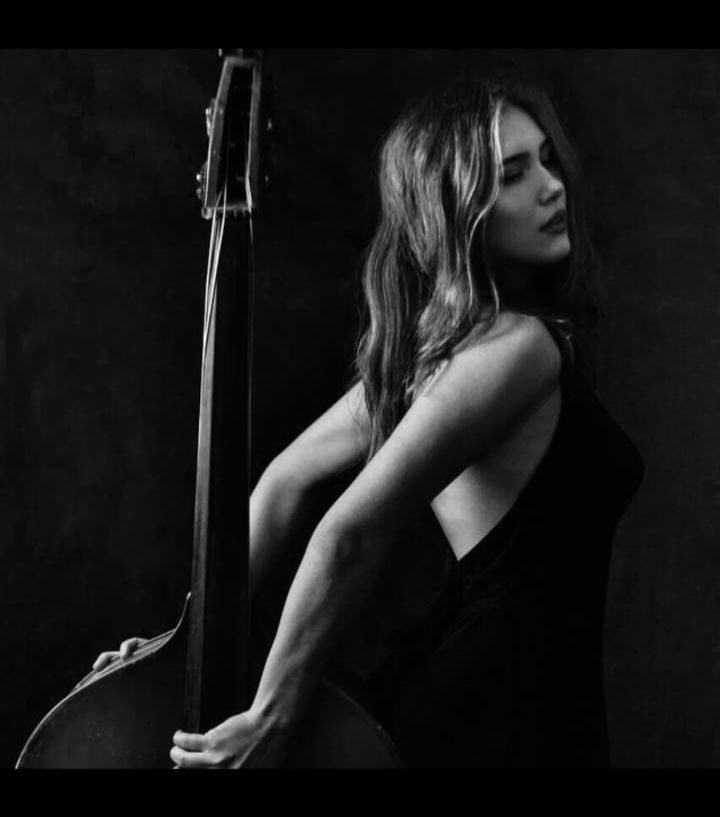
By Matthew Parish
Wednesday 26 August 2026
Could you introduce yourself to our readers and tell us how you first became interested in singing and playing the guitar?
My name is Katya, I live in Lviv and music has been part of my life for as long as I can remember. I started with singing because I simply loved songs and wanted to reproduce the emotions I heard in them. The guitar came later. I liked the idea that with just one instrument I could accompany myself and turn almost any place into somewhere I could perform. Eventually singing and playing became inseparable for me.
When did you first realise that music was going to become an important part of your life?
I don’t think there was one dramatic moment. It happened gradually. I realised that whenever I was happy I wanted to sing, and whenever I was sad I also wanted to sing. Music became a way of understanding my own emotions. At some point I realised it wasn’t simply something I did — it was part of the way I experienced life.
You perform solo, accompanying yourself on the guitar. What attracts you to this relatively simple and intimate form of performance?
I love its honesty. There is just a voice, a guitar and the audience. You cannot hide very much, but that also creates a special connection. Sometimes a quiet song performed simply can affect people more strongly than something with a huge production behind it. I like being able to see people’s faces and feel when they are really listening.
You sing songs in both English and Ukrainian. Do you feel that your voice, personality or emotions change depending upon the language in which you are singing?
Yes, definitely. Ukrainian feels very close and personal because it is my own language and there are emotions in individual words that I understand instinctively. English has a different rhythm and sometimes gives me another kind of freedom. Rock and pop in English can feel very natural because I grew up hearing so much music in that language. I don’t think one is better than the other — they reveal different sides of me.
How do you choose the songs you perform?
Usually there has to be some emotional connection. A song may be famous, but if I don’t feel anything when I sing it, the audience will notice. I look for songs where I can find something of myself inside the lyrics or melody. Then I try not simply to imitate the original performer but to discover how the song sounds when it becomes just my voice and my guitar.
Which English-language singers or bands have influenced you most?
I have listened to many different artists, particularly singers and bands whose songs remain powerful even when you remove the production and play them acoustically. I admire performers who can make a familiar song sound intensely personal. For me, the greatest lesson from English-language pop and rock has been that technical perfection is not enough — the listener has to believe you.
Which Ukrainian musicians have had the greatest influence upon you?
Ukrainian music has changed enormously and there are artists from several generations whom I admire. What interests me particularly is the combination of modern pop and rock with something unmistakably Ukrainian — whether that comes through the language, melody or emotional character. Ukrainian musicians have shown that we do not need to imitate another country’s culture to create music that can travel internationally.
Is there a particular song that you most enjoy performing?
There are several, and my favourite changes depending upon my mood. Usually it is a song where I forget that I am technically “performing”. When that happens, I stop thinking about chords or the next line and simply live inside the song for a few minutes. Those are always the performances I enjoy most.
How do you balance respecting the original with making a famous song your own?
I think you have to understand why the original works before you start changing it. I don’t change things simply for the sake of being different. But my voice is different, my experiences are different and performing with one guitar naturally changes the atmosphere. So I try to preserve the heart of the song while allowing my own personality to appear.
What is distinctive about performing in Lviv?
Lviv audiences listen. That sounds like a simple thing, but for a musician it matters enormously. This is a city where music seems to belong naturally in cafés, courtyards, small venues and on the streets. There is also an interesting mixture of people here — locals, Ukrainians from other parts of the country and foreigners — so sometimes you can see a song crossing cultural boundaries right in front of you.
Does Lviv itself influence your music?
Absolutely. Lviv has its own rhythm. It can be romantic and beautiful, but also melancholic, unpredictable and sometimes chaotic. You can walk through the centre and hear several different kinds of music within a few minutes. The city encourages a certain intimacy, and I think that suits acoustic music particularly well.
Has the war changed the way you think about music?
Yes. It is impossible to live in Ukraine now without the war changing the meaning of ordinary things. Music can sometimes seem unimportant compared with what people are going through, but then you realise that people need culture precisely because life is difficult. We still need beauty, friendship, laughter and songs. Continuing to create is also a way of insisting that our lives cannot be reduced entirely to war.
Can music provide a moment of normality or emotional release during wartime?
Very much so. Sometimes people don’t want to talk about what they are feeling, but they can hear a song and suddenly recognise those feelings in it. And sometimes people simply need three minutes in which they are not thinking about sirens, news or the front. That doesn’t mean forgetting reality. It means giving yourself enough emotional space to continue living inside it.
Has the war changed the songs that audiences want to hear?
I think people listen differently now. Some lyrics acquire meanings that perhaps even the songwriter never intended. Songs about home, separation, love, loss and returning can suddenly become extremely powerful. At the same time, audiences also want joyful music. People shouldn’t feel guilty for wanting to smile or dance during difficult times.
Is the world discovering a Ukrainian musical identity?
I think so, and I hope that continues. Ukraine has an enormous cultural depth that many people abroad knew almost nothing about before the full-scale invasion. The important thing now is that foreigners discover Ukraine not only as a country at war, but as a country with its own language, humour, music, literature and personality. Music can communicate those things without requiring a political explanation.
What Ukrainian song would you choose to introduce a foreign listener to contemporary Ukraine?
That is almost impossible to answer with only one song because contemporary Ukraine contains so many different moods. I would probably choose something that combines a recognisably Ukrainian character with a modern sound. I would want the listener to realise that Ukrainian culture is alive and developing — it isn’t something preserved in a museum.
Is there an English-language song that particularly resonates with Ukrainians today?
There are many songs about survival, freedom, separation and refusing to give up that sound different when you hear them in Ukraine today. That is one of the extraordinary things about music: a song written decades ago in another country can suddenly describe something you are experiencing now. The circumstances change, but human emotions don’t change very much.
Does the vulnerability of performing alone appeal to you?
Both — it appeals to me and it frightens me. If something goes wrong, everyone knows it! But perfection isn’t necessarily what makes a live performance memorable. A small imperfection can remind the audience that something real is happening in front of them. That risk creates energy, and I think I would miss it if everything were completely controlled.
What happens in your mind immediately before you begin performing?
Usually too many things at once! I may be thinking about the first chord, wondering whether the guitar is perfectly in tune and noticing individual people in the audience. Then I begin, and after the first few seconds most of those thoughts disappear. The best moment is when concentration replaces nervousness.
What is the best reaction you have received from somebody listening to you?
The reactions I remember most are usually quiet ones. Of course applause is wonderful, but sometimes somebody comes afterwards and says that a particular song reminded them of someone or meant something important to them. When somebody tells you that your performance genuinely moved them, you remember why you wanted to sing in the first place.
Do you write your own songs?
It is something I would like to develop further. Performing other people’s songs teaches you an enormous amount about how melodies and lyrics work, but creating something entirely your own is different. I would want to write honestly about things I know — relationships, Lviv, uncertainty, hope and what it means to be young in Ukraine at this particular moment in history.
If you could perform a duet with any living singer, whom would you choose?
There are so many possibilities that I would probably change my answer every week! I would choose somebody with a very distinctive voice rather than simply the most famous person possible. A duet is interesting when two voices are different enough to surprise you but still somehow belong together.
If you could perform with any musician from history, who would it be?
I would be tempted to choose one of the great rock musicians from the twentieth century, partly because I would love to know what those legendary performers were actually like in a room with just a few musicians and no mythology surrounding them. I think you learn much more about somebody’s musicianship in that situation than you do from a huge stadium concert.
Where would your dream concert take place?
English:Some enormous international stage would obviously be exciting, but I also love the idea of an unforgettable concert somewhere beautiful in Lviv. My dream would combine both things: enough people to create tremendous energy, but still enough intimacy to feel connected to them. And perhaps an audience containing people from many countries, listening to songs in both Ukrainian and English.
What ambitions do you have for the next few years?
I want to keep improving rather than deciding too early exactly what kind of musician I am supposed to become. I would like to perform more, develop original material and work with other musicians while preserving the simplicity I love about singing with a guitar. And of course I would love Ukrainian music — including my own music one day — to reach audiences far beyond Ukraine.
Finally, if you had to explain in a single sentence why you sing, what would you say?
I sing because sometimes a song can say more honestly what I feel than I can say in ordinary words.


