


Burn After Reading: How Ukrainian Intelligence Disrupts the Russian War Machine
- Jul 31, 2025
- 5 min read
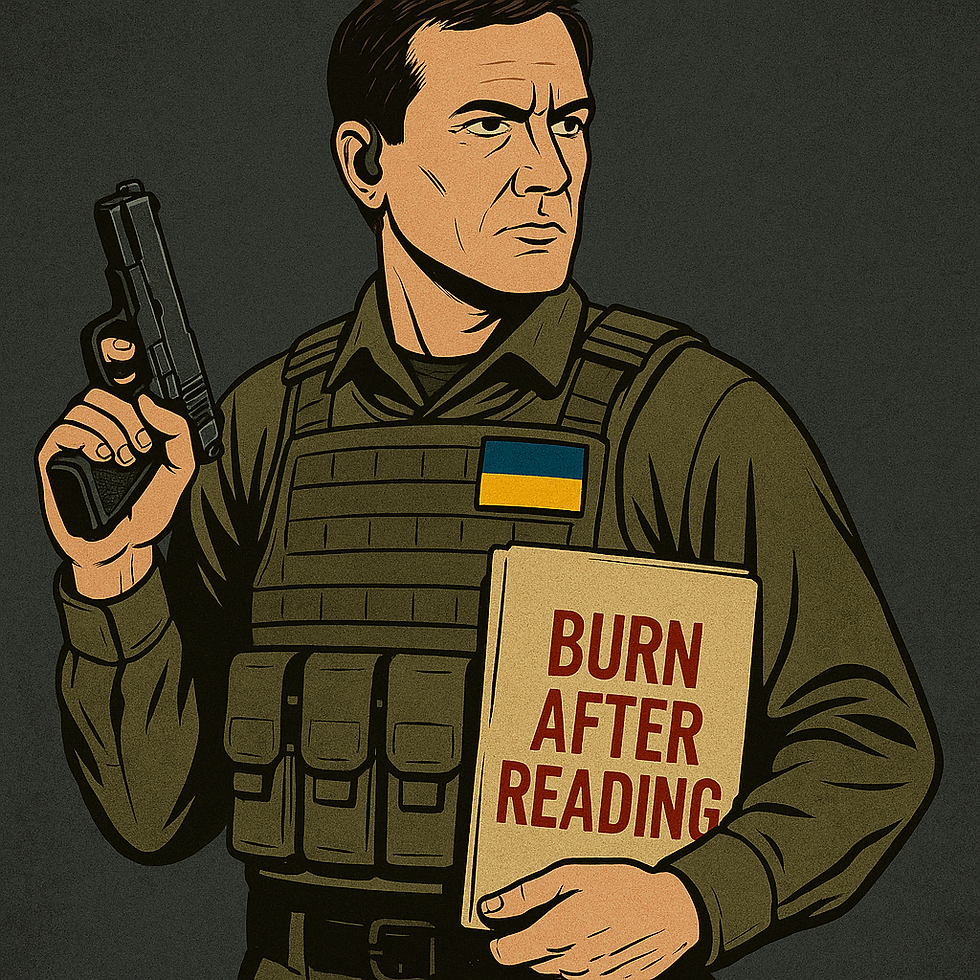
In the shadows of trenches and missile strikes, beyond the digital front lines and partisan resistance, Ukraine’s intelligence services are waging one of the most sophisticated and asymmetric wars of the twenty-first century. Against a numerically superior and deeply embedded Russian military apparatus, Ukrainian intelligence—military, civilian, and cyber—has proven capable not only of surviving but actively disrupting and degrading the Kremlin’s war machine.
Here we will dive into the strategic evolution of Ukrainian intelligence services since the full-scale Russian invasion of 2022. We will examine their restructuring, operational successes, and the distinctive blend of local networks, open-source ingenuity and Western collaboration that has enabled Ukraine to strike deep behind enemy lines, foil disinformation campaigns, and maintain tactical advantage in a brutal and protracted conflict. Above all, we will highlight how intelligence—once a weak spot inherited from the Soviet past—has become a potent weapon in Ukraine’s existential struggle for sovereignty.
From Soviet Legacy to Strategic Necessity
At the time of independence in 1991, Ukraine inherited a Soviet-style intelligence system riddled with corruption, Russian penetration, and institutional inertia. The Security Service of Ukraine (SBU), while formally under Kyiv’s control, struggled to disentangle itself from Russian influence throughout the 1990s and 2000s.
The Russian annexation of Crimea in 2014, however, was a pivotal wake-up call. The Kremlin’s operation was facilitated by years of subversion within Ukrainian security structures. Dozens of SBU officers defected; Ukrainian Navy leadership in Sevastopol crumbled. A decade later, the intelligence services have transformed from infiltrated relics into one of Ukraine’s most dynamic institutions—professionalised, decentralised, and on the offensive.
The full-scale invasion in February 2022 turbocharged this transformation. The need for real-time battlefield intelligence, sabotage networks, and psychological operations pushed Ukrainian intelligence into a central role. In wartime, information is survival—and Ukraine began to excel at using it as a weapon.
The Triad of Ukrainian Intelligence
Ukraine’s intelligence structure now revolves around three major institutions:
The Security Service of Ukraine (SBU)
The SBU operates under the civilian Ministry of Internal Affairs and is primarily responsible for counterintelligence, anti-terrorism and domestic security. Since 2022 it has aggressively pursued Russian sabotage networks, arrested collaborators, and dismantled spy rings even in rear areas like Lviv and Odesa.
The Main Directorate of Intelligence (HUR)
Operating under the Ministry of Defence, the HUR is responsible for military intelligence and special operations. It coordinates drone and sabotage attacks deep in occupied territories and even inside Russia. HUR operatives are behind many of the boldest and most symbolic Ukrainian strikes.
The Foreign Intelligence Service of Ukraine (SZRU)
Focused on international intelligence and diplomatic liaison, the SZRU ensures coordination with Western allies. It plays a quieter but vital role in Ukraine’s integration into NATO intelligence networks and in shaping the global information battlefield.
These services, while distinct and following the Soviet-Russian model of distinction between intelligence structures, cooperate far more effectively than in the past. Joint task forces, inter-agency command structures, and operational deconfliction have become hallmarks of the Ukrainian intelligence renaissance.
Striking Behind Enemy Lines
Perhaps the most remarkable transformation has been Ukraine’s offensive capacity inside Russian-held territory and even on Russian soil. Ukrainian intelligence has claimed or been attributed with:
The assassination of high-ranking collaborators and FSB officers in occupied Luhansk, Donetsk, and Crimea—carried out via car bombs, gunmen, or mysterious “accidents”.
The targeting of fuel depots, railways and airbases deep inside Russia using both special forces and sabotage cells. The spectacular drone strike on Engels Air Base in December 2022 marked a turning point.
The crippling of Russian Black Sea naval operations through targeted strikes on command ships, radar stations, and headquarters. HUR operations in Crimea have repeatedly undermined Russian logistical lines.
The penetration of Russian communications and psychological operations, often leaking intercepted audio of demoralised troops, corrupt commanders, or war crimes in progress.
Each of these strikes carries both tactical and symbolic weight. They drain Russian morale, divert resources, and demonstrate that no area—however deep in Russia—is entirely safe.
The Open-Source Edge
One of the most revolutionary aspects of Ukraine’s intelligence culture is its integration of open-source intelligence (OSINT) into military and strategic planning.
Ukrainian civilians, volunteers, and tech entrepreneurs have built digital platforms that track Russian troop movements using:
Satellite imagery
Social media posts
Geolocation data
Flight tracking and rail monitoring
Organisations like InformNapalm and Myrotvorets, as well as websites like “DeepState”, crowdsource intelligence and push that crowdsource intelligence to analysts and commanders in near real-time. Meanwhile, projects like the “Eyes” app, developed with SBU input, allow civilians to report troop sightings directly to military databases.
Where Russian intelligence relies on hierarchy and secrecy, Ukraine thrives on decentralisation and transparency. The battlefield has become a networked cloud, in which every smartphone is a node and every citizen a sensor.
Western Support and Interoperability
Ukraine’s transformation would not have been possible without deep cooperation with Western intelligence agencies.
The United States, United Kingdom, Poland, Lithuania, and others have provided:
Secure communications platforms
Satellite intelligence
Interception tools
Cybersecurity infrastructure
Training in counterintelligence and HUMINT (human intelligence)
This support, while officially deniable, has been critical. It allows Ukrainian forces to anticipate Russian offensives, decrypt tactical communications and maintain superior situational awareness.
In many ways, Ukraine is now operating as a de facto NATO intelligence partner. Her successes are shared, and her failures are studied.
Cyber War and Information Operations
Ukrainian intelligence is also waging a cyber war. The SBU and volunteer groups such as the “IT Army of Ukraine” have carried out:
Website defacements
Data leaks of Russian military personnel
Denial-of-service attacks on Russian media and state systems
Exfiltration of emails from Russian ministries
At the same time, Ukraine has been extraordinarily adept at the information war. The leaking of captured Russian plans, the broadcasting of intercepted calls, the viral spread of battlefield footage—all have kept global sympathy on Ukraine’s side and undermined Russian propaganda.
Even on Russian platforms like VKontakte or Telegram, Ukrainian operatives sow discontent, impersonate pro-Kremlin voices, and inject reality into closed information systems distributed by the enemy.
A Doctrine of Asymmetric Disruption
The cumulative impact of these operations is more than the sum of its parts. Ukrainian intelligence does not aim to decapitate the Russian state—it seeks to disorient, degrade, and distract.
Its doctrine is built upon asymmetric disruption: forcing a larger, slower adversary to fight on too many fronts. Each collaborator killed in Mariupol, each railway sabotaged in Bryansk, each drone strike on a Crimean airfield—these are not isolated acts. They are calculated ripples in a wider sea of instability.
The goal is not just to win battles, but to erode Russia’s war-waging capacity from within.
Ethics, Legality, and Strategic Risk
The boldness of Ukraine’s intelligence operations raises important ethical and strategic questions.
What are the limits of state-sponsored assassination?
How does Ukraine preserve democratic accountability in wartime?
What if Western support enables operations that escalate the conflict or provoke reprisals?
Ukrainian officials are careful to frame their operations as legal acts of wartime self-defence, conducted in accordance with international law. But in an age where warfare is hybrid and blurred, Ukraine’s intelligence edge must be constantly weighed against the risk of backlash or overreach.
Intelligence as National Resilience
Ukraine’s success in disrupting the Russian war machine is a testament not only to courage and cleverness, but to institutional reform and moral clarity. Her intelligence services—once broken and infiltrated—have become a vanguard of sovereignty, operating across borders, domains, and paradigms.
What began as a desperate fight for survival has matured into a strategic contest for initiative. And in this shadow war of sabotage, sensors, and secrets, Ukraine is proving that knowledge, not numbers, is the currency of modern power.
The message to Moscow is clear: you may have the guns, but we have the truth. And we know where to find you. Burn after reading.


